
Ethereum vs Bitcoin: Which Cryptocurrency Wins in 2026?


In the ever-changing realm of cryptocurrency, Bitcoin and Ethereum remain the top contenders. When I first got into crypto, I was overwhelmed by the choices. But honestly, Bitcoin and Ethereum stood out. They’re not just popular; they’re foundational to the entire ecosystem. So, what’s the difference between these two giants? Let’s break it down.
Understanding Bitcoin and Ethereum
Bitcoin is primarily a digital currency. It’s designed for peer-to-peer transactions, and that’s pretty much its main focus. Think of it as digital cash. Meanwhile, Ethereum is more than just a currency. It’s a platform for decentralized applications (dApps) and smart contracts. This distinction is major when considering their use cases.

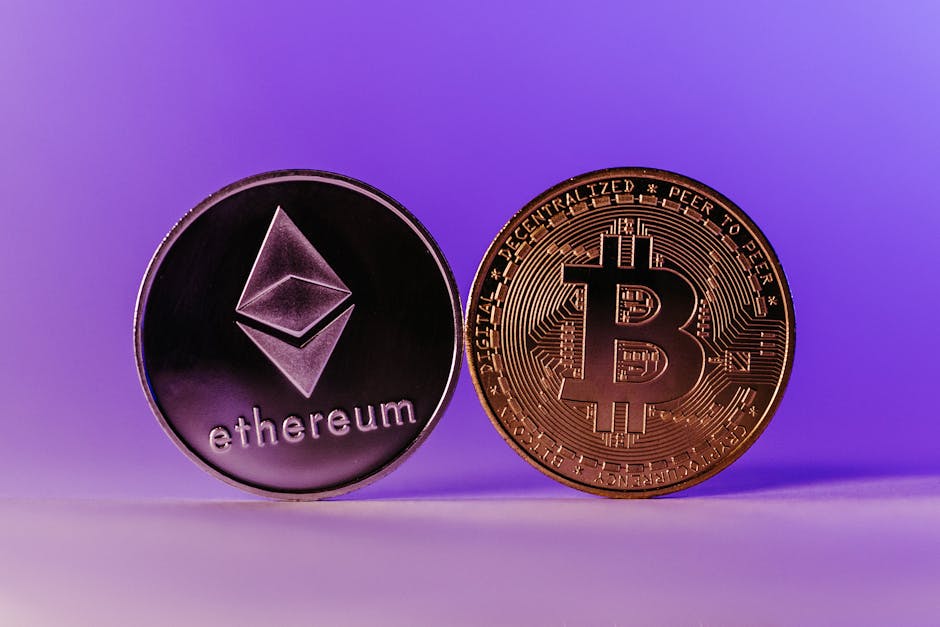
Now, let’s talk about technology. Bitcoin runs on a proof-of-work (PoW) model, which is energy-intensive. Miners solve complex puzzles to validate transactions. In contrast, Ethereum is transitioning to proof-of-stake (PoS), which is more eco-friendly. Instead of miners, validators stake their coins to secure the network. I honestly hate how much energy Bitcoin consumes. It’s a huge concern for the environment. But hey, it’s a trade-off for security, some argue.
PoW offers solid security, but it’s not sustainable long-term. PoS is much more efficient, but some worry about centralization risks. It’s a constant balancing act.
Use Cases and Network Capabilities
Bitcoin is often referred to as “digital gold.” It’s seen as a store of value, especially during economic uncertainty. People buy it as a hedge against inflation. On the flip side, Ethereum is like the Swiss Army knife of crypto. It supports various applications, from DeFi to NFTs. My friend swears by Ethereum for its versatility. He’s built several dApps on the platform.
When I tested Ethereum’s network, I noticed faster transaction speeds compared to Bitcoin. Ethereum can process more transactions per second. But that’s not to say Bitcoin isn’t secure. It’s been around longer and has a proven track record. It’s the OG of crypto. Still, Ethereum’s adaptability is hard to ignore.
Bitcoin’s network is focused on secure and reliable transactions. Ethereum’s network is designed for complex applications. It’s a fundamental difference in their architecture.
Market Trends and Performance Metrics
As of 2026, Bitcoin’s market cap hovers around $500 billion, while Ethereum sits at approximately $250 billion. According to a 2024 study by Coinbase Institutional, Bitcoin accounts for about 45% of the total market share. Ethereum follows closely, but the gap is narrowing. It’s a race to the top.
Not gonna lie, I was skeptical about Ethereum’s future when it first launched. I wasn’t sure if it would catch on. But its growth has been impressive. The rise of DeFi has fueled Ethereum’s popularity, making it a go-to for many investors. DeFi is basically revolutionizing finance.

Future Outlook
Looking ahead, both cryptocurrencies have their strengths. Bitcoin’s scarcity gives it a solid foundation, while Ethereum’s adaptability opens doors for future innovations. I think it’s safe to say that both will continue to play significant roles in the crypto space. They’re both here to stay.
I believe Bitcoin will continue to be a store of value. Ethereum will likely become the backbone of the decentralized web. That’s my prediction.

Summary
Bitcoin is a solid choice for those seeking stability, while Ethereum offers versatility and innovation. Both have their place in a well-rounded portfolio. If you’re looking to invest, consider your goals and risk tolerance. Don’t put all your eggs in one basket. Diversify!
Regulatory World and Adoption
The regulatory scene is a HUGE factor. Governments around the world are grappling with how to regulate crypto. It’s a complex issue. Some countries are embracing it, while others are cracking down.
Bitcoin’s been around longer, so regulators have had more time to figure it out. Ethereum’s newer, and its smart contract capabilities add another layer of complexity. That’s why you see a lot of regulatory uncertainty surrounding DeFi. I think that clear regulations will be key for mainstream adoption.
Adoption rates are also important. More and more businesses are accepting Bitcoin as payment. Ethereum is being used by developers to build all sorts of cool applications. According to a 2025 report by Statista, about 15% of US adults own cryptocurrency. That number is expected to grow significantly in the coming years.
I’ve noticed that younger generations are more open to crypto. They see it as the future of finance. Older generations are often more hesitant. It’s a generational divide, honestly.
Technological Advancements and Scalability
Both Bitcoin and Ethereum are constantly evolving. Developers are working on ways to improve their technology. Scalability is a major challenge for both networks. Bitcoin’s transaction speeds are relatively slow. Ethereum’s been working on scaling solutions like sharding.
Layer-2 solutions are also gaining traction. These are built on top of the main blockchain to improve scalability. Lightning Network is a Layer-2 solution for Bitcoin. Polygon is a popular Layer-2 solution for Ethereum. I’ve been experimenting with Layer-2 solutions, and they’re pretty promising.
Quantum computing is another potential threat. Quantum computers could potentially break the cryptography used by Bitcoin and Ethereum. Researchers are working on quantum-resistant cryptography to address this concern. It’s a race against time, in some ways.
Honestly, technology never stands still. It’s always changing, always improving. That’s what makes crypto so exciting and challenging.
Community and Development Activity
The community behind a cryptocurrency is super important. A strong community can drive adoption and innovation. Bitcoin has a large and dedicated community. Ethereum also has a vibrant community of developers and users. I’ve been impressed by the passion and dedication of the crypto community. People are genuinely excited about the potential of this technology.
Development activity is another key indicator of a cryptocurrency’s health. Are developers actively working on improving the network? Are new features being added? Bitcoin’s development is more conservative. Ethereum’s development is more experimental. That’s just the nature of the two projects.
I’ve participated in several crypto hackathons. It’s amazing to see what developers can build in a short amount of time. The creativity and innovation are truly inspiring. It’s where you see the future being built, basically.
Ultimately, the success of Bitcoin and Ethereum will depend on a combination of factors. Technology, adoption, regulation, and community all play a role. It’s a complex equation, but I’m optimistic about the future of crypto. I really am.
You Might Also Like


