
Bitmain Cuts Mining Rig Prices: A Shift in Cryptocurrency Economics

Introduction
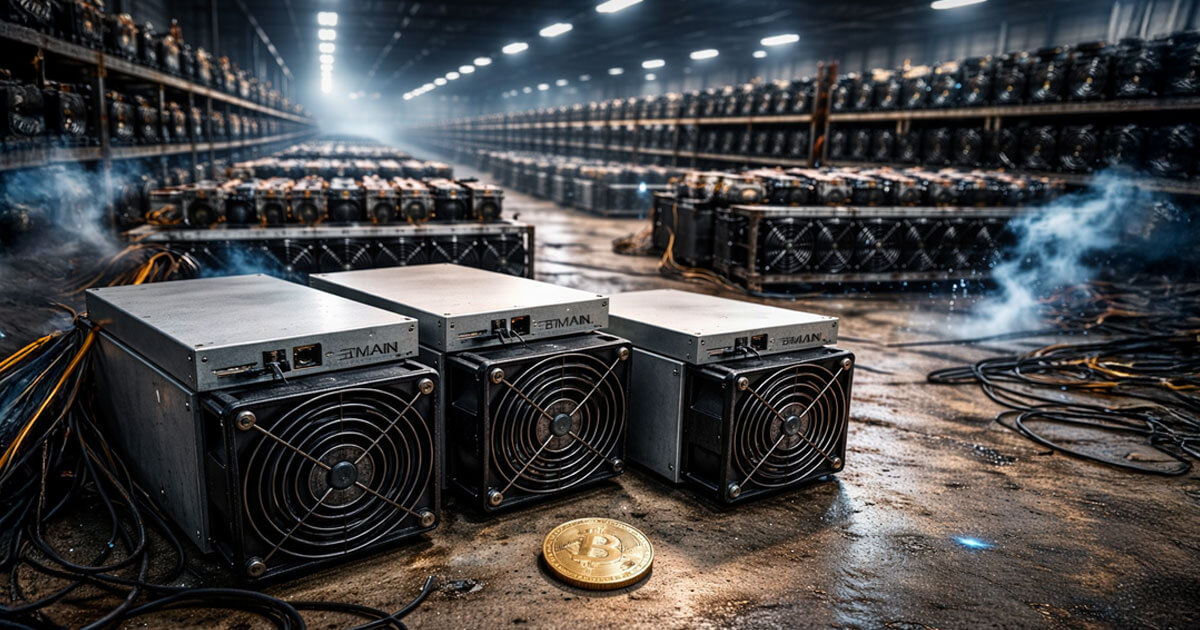
Recently, Bitmain announced a significant reduction in prices for its Bitcoin mining rigs, marking a turning point in the cryptocurrency mining market. This change comes on the heels of falling miner revenue per unit of hashrate, particularly observed in November. The discounts apply to both current-generation hydro and immersion products, indicating a shift in the market’s dynamics.
Understanding the Price Cuts

The Impact of Falling Mining Revenue
Bitmain’s price slashes reflect a clear trend: the strength of Bitcoin’s price isn’t translating into increased profitability for miners. Traditionally, sturdy Bitcoin prices would lead to hardware scarcity, driving up prices. However, the current situation proves otherwise. Miner metrics indicate that as of November 2025, the average hashprice was around $39.82 per petahash per day, down from previous highs. This shift underscores a reevaluation of the mining economics.
Current Pricing Trends
TheMinerMag reported that a bundle for the S19 XP+ Hydro mining rig, estimated at approximately 19 J/TH, is now priced around $4/TH, with shipping expected to start in January 2026. Some internal price lists even show as low as $3/TH for certain S19 Hydro models, while newer S21 immersion models range from $7 to $8/TH before discounts.
Hashprice and Its Significance
Hashprice refers to the revenue generated per unit of hashrate. It’s an must-have metric for miners as it determines the potential profits from mining activities. As mentioned earlier, the hashprice averaged $39.82/PH/day in November, indicating a significant downward trend compared to prior cycles.
Calculating Profitability
To gauge the profitability of a mining operation, let’s consider a hypothetical rig with a hashrate of 200 TH/s. At a hashprice of $40/PH/day, this rig would generate approximately $8 daily. However, factoring in energy costs, a machine running at 19 J/TH would consume about 91.2 kWh daily. With an average energy price of $0.06/kWh, the energy cost would be around $5.47 per day, leaving a net profit of merely $2.53 before accounting for other operational expenses. (CoinDesk)
The Shift in Market Dynamics
Changing Buyer Behavior
The evolving economics of Bitcoin mining are reshaping buyer behavior. Traditionally, higher Bitcoin prices would correlate with increased demand for ASIC miners. However, the current market has shown that this correlation is weakening. As miners face tight margins and increased competition, they’re adopting a more conservative approach to purchasing new hardware. You might also enjoy our guide on Bitcoin Hyper Presale Surpasses $12 Million: What’s Next?.
Supply-Side Factors
Unlike previous cycles where scarcity drove rapid price increases, the current market resembles a more industrial environment. Manufacturers are now managing production and turnover amid fierce competition, particularly from secondary markets. This competition has led to a more measured pricing strategy.
Bitmain’s Strategic Moves
Bundling and Hosting Solutions
Bitmain’s strategy includes bundling its hardware with hosting services, effectively shifting the sales narrative from merely selling equipment to providing an end-to-end operational solution. This approach not only addresses current price sensitivity but also helps miners access the power needed for efficient operations.
Capital Allocation Trends

Another factor influencing ASIC demand is how miners allocate capital. Many are diversifying their portfolios, incorporating AI and high-performance computing capabilities into their data centers. This trend not only attracts investor interest but also provides additional revenue streams beyond just Bitcoin mining.
Future Outlook for Mining Economics
Market Predictions
As we look ahead, the forward pricing for hashprice is expected to remain cautious. Recent analyses showed a decrease in USD-denominated forward hashprice by around 16-18% from early November to early December. This divergence indicates ongoing pressure on miners who primarily manage expenses in USD.
The Role of Network Difficulty
Network difficulty plays a critical role in determining miner profitability. As difficulty rises, the cost of mining increases, impacting the overall hashprice. Miners will need to continually adjust their strategies to remain competitive, especially as the market market evolves. For more tips, check out How Bitcoin Miners Are Adapting to Rising Costs and Market C.
Conclusion
Bitmain’s recent price cuts on mining rigs signify a major shift in the cryptocurrency mining sector. As the economics of mining continue to evolve, miners will need to navigate the complexities of pricing, energy costs, and competition. Understanding these dynamics is must-have for anyone looking to invest in Bitcoin mining equipment or operations. (Bitcoin.org)
Frequently Asked Questions (FAQ)
1. What factors are influencing Bitmain’s price cuts?
Bitmain’s price cuts are primarily driven by declining miner revenues and increased competition in the market, which have led to a reevaluation of mining economics.
2. How does hashprice affect mining profitability?
Hashprice represents the revenue generated per unit of hashrate. A lower hashprice means reduced profitability for miners, as it directly impacts their daily earnings.
3. What are the benefits of bundled hosting services?
Bundled hosting services offer miners a full solution that includes hardware, energy procurement, and operational support, simplifying the mining process and reducing initial capital expenses.
4. Why are miners diversifying into AI data centers?
Miners are diversifying into AI data centers to create additional revenue streams, attract investor interest, and hedge against the volatility of the cryptocurrency market.
5. What should potential buyers consider before purchasing mining rigs?
Prospective buyers should evaluate current market conditions, hashprice trends, energy costs, and the overall return on investment before committing to purchasing mining rigs.
You Might Also Like


