
Transforming AI Infrastructure: Insights from David Liberman

Introduction to Gonka’s Innovative Approach
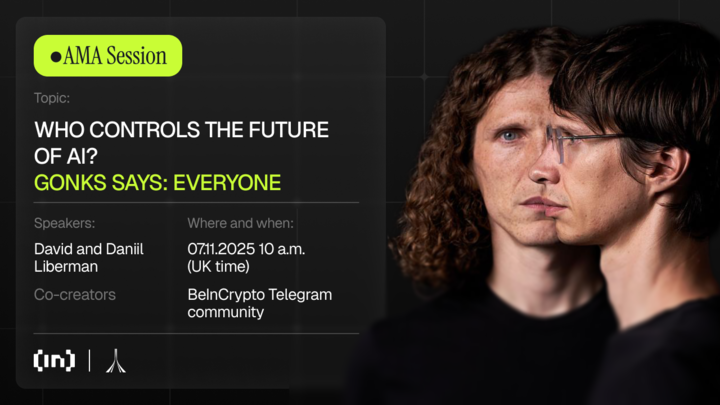
Gonka is changing the market of decentralized infrastructure by optimizing computational resources used for training and running AI models. Unlike traditional cloud services that can be expensive and often centralized, Gonka offers a highly efficient solution that utilizes almost all its computing capacity for significant AI tasks. In a recent AMA with David Liberman, the co-founder of Gonka, we learned how their unique consensus mechanism revamps Proof-of-Work into an operational system for AI computation.
What Makes Gonka Unique?

During the session, David clarified that Gonka isn’t just a startup or platform but a decentralized network and protocol. This means it operates through consensus rather than a centralized organization overseeing it. Miners actively participate in governing the network, reminiscent of how Bitcoin functions. This structure allows Gonka to remain community-driven and decentralized.
David’s Perspective on Decentralization
David emphasized that Gonka was structured from its inception to be genuinely decentralized, both technologically and legally. Based in the U.S., the team has avoided the pitfalls of raising funds in ways that could classify their tokens as securities, thereby ensuring that the network and its coins are available for developers to make use of freely. It’s refreshing to see a cryptocurrency project prioritize compliance.
The Collaboration Behind Gonka
What’s fascinating about Gonka is its origin story, which stems from a collaboration between Web2 AI experts and Web3 miners. This unique blend of backgrounds has shaped the network’s design into something truly innovative. David shared that many developers in the AI sector are based in the U.S., and this project aims to harness their skills while promoting decentralization.
The Vision of Decentralized Compute Power
The idea of decentralizing compute power isn’t new for David and his team. They previously built a massive network of computers for scientific computing, ultimately realizing they had more power than leading supercomputers of the time. This experience solidified their belief that future networks should be decentralized and owned by the collective rather than a few centralized entities. (CoinDesk)
Proof-of-Work Redefined
In the current space, Gonka employs a Proof-of-Work model, but not purely for mining purposes. Instead, it’s designed to train and operate AI models, making the computation useful rather than wasteful. David explained the technicalities of their innovative approach and how they’ve made Proof-of-Work productive. You might also enjoy our guide on Bitcoin’s $112K Resistance: Altcoins Show Gradual Recovery.

Understanding the Technical Framework
Gonka’s Proof-of-Work model issues new coins daily to miners based on the computational power they contribute. To achieve this, the infrastructure is built on an extensive network of high-performance GPUs and ASICs—something traditional Proof-of-Stake protocols struggle to replicate. Gonka’s function is grounded in modern AI technologies like Transformers, which are key to most contemporary AI models.
Ensuring Fairness in a Scalable Model
One pressing issue in decentralized networks is maintaining fairness as they scale. David addressed concerns about larger GPU holders potentially centralizing the network again. He explained that Gonka’s growth is driven by incentives that promote computing power, ensuring that smaller players still have a fair chance to participate.
Access Over Ownership
The goal isn’t just to scale; it’s also about keeping the door open for everyone with hardware to join in. David noted that the Gonka network aims to empower those with high-end GPUs—the real-world scenario today is that many of these are owned by smaller players who’d otherwise be sidelined.
The Future of AI Compute Currency
David made a bold claim that AI computation is the new currency, and the Gonka token (GNK) is the first to embody this concept. He explained how compute power in the Gonka ecosystem holds significant value, backed by the costs associated with the GPUs mining the tokens.
The Economic Dynamics of GNK
Each day, around 310,000 GNK tokens are issued, with a halving event every four years that reduces this number. The token’s value is tied to the underlying costs of GPU resources, meaning as more GPUs join the network, the value of each coin increases. This clever economic model has already shown that the earnings from mining can increase substantially as the network expands. For more tips, check out Shifting Cybersecurity Budgets: The Rise of Software and AI .
Conclusion: Pioneering a New Era
Gonka is redefining the relationship between AI and decentralization. By transforming the Proof-of-Work model into a productive system for AI computation, they’re not only challenging centralized tech giants but also paving the way for a decentralized future. The insights shared by David Liberman showcase a promising path forward for both blockchain and AI technologies. (Bitcoin.org)
You Might Also Like


