
How Inexpensive Hardware Can Intercept Bitcoin Mining Data via Satellite

Introduction
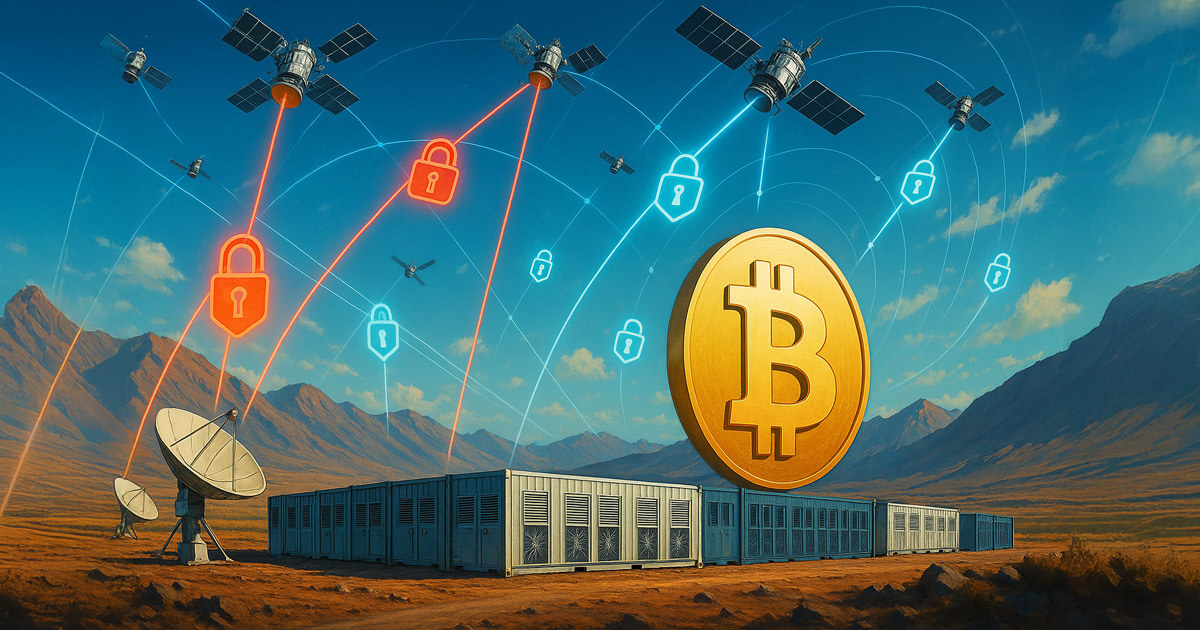
If you’re involved in Bitcoin mining, you might be surprised to learn that it’s possible to intercept miner traffic through satellites using just $800 worth of consumer hardware. Recent research from UC San Diego and the University of Maryland indicates that nearly half of the downlinks from Geostationary (GEO) satellites transmit unencrypted data. This vulnerability raises significant security concerns for those involved in the mining ecosystem.
Understanding Satellite Data Transmission

The Basics of Satellite Communications
Satellites provide must-have communication services worldwide, including data transmission for various industries, including telecommunications and financial services. Unfortunately, many of these signals are transmitted without encryption, making them susceptible to interception.
Research Findings
The research team from UC San Diego has documented their findings in a paper titled “Don’t Look Up,” which they presented at the CCS 2025 conference in Taipei. This study isn’t just theoretical; it reveals a real and documented risk in the satellite communication space. The researchers successfully captured not only telco backhaul data but also industrial control traffic and law enforcement communications, shedding light on the broader implications of unencrypted satellite transmissions.
The Risks for Bitcoin Miners
Understanding Stratum Protocol
For Bitcoin miners and mining pools, the threat is closely tied to the Stratum protocol, which is instrumental in connecting miners to pools. The protocol makes easier the distribution of work, collection of shares, and management of hash power. Historically, Stratum V1 has often operated over unsecured TCP connections unless TLS encryption is specifically implemented. This means that sensitive data, including miner identifiers and job templates, can be intercepted when transmitted over satellite links.
Transitioning to Stratum V2
The good news is that Stratum V2, the updated version of the protocol, incorporates authenticated encryption by default. By making use of a Noise handshake and AEAD ciphers, Stratum V2 significantly mitigates the risks associated with passive data interception. Miners can still use older hardware by using a translation proxy to connect to Stratum V2 without requiring firmware upgrades on their ASICs. (CoinDesk)
Comparing Satellite Services
Blockstream Satellite’s Unique Approach
It’s key to differentiate between various satellite services. For example, Blockstream Satellite broadcasts public Bitcoin blockchain data through a one-way downlink. While it supports encrypted messaging for senders, it’s important to note that this service is designed for improving network resilience in areas with poor internet access, rather than carrying sensitive mining credentials or control commands. This is a significant departure from the risks posed by GEO backhaul services. You might also enjoy our guide on Qwen Deep Research: Revolutionizing Content Creation with AI.
Financial Considerations and Security
As mining profitability fluctuates—in September, hash prices hovered around $51 per petahash—operators are under pressure to manage their operating costs. Interestingly, the primary expense associated with implementing transport encryption is the engineering time, not necessarily new hardware. This could encourage miners to prioritize security upgrades without incurring significant additional expenses.
Mitigating Security Risks
Operational Guidance for Miners
To reduce risks associated with satellite data transmissions, miners should adhere to the following operational guidelines:
- Implement TLS: Ensure that TLS is enforced across all Stratum V1 endpoints and routers.
- Adopt Stratum V2: Prefer Stratum V2 for new links and apply a translation proxy for older systems.
- Monitor for Anomalies: Actively monitor share patterns and endpoint drift to identify potential interference.

Understanding the Risks
Using a simple sensitivity model, we can analyze the potential risk exposure for Bitcoin mining operations relying on unencrypted satellite connections. For example, if we denote total hashrate as H (approximately 1,223 EH/s), we can quantify the at-risk hashrate based on various assumptions about the percentage of operations making use of satellite backhaul and Stratum V1 without TLS.
The Future of Secure Bitcoin Mining
Encouraging Secure Practices
The future of secure Bitcoin mining depends on how quickly pools and miners adapt to encrypted transport options. A proactive approach would mean transitioning to TLS by default for Stratum V1 and promoting the use of Stratum V2. This would effectively minimize exposure, while a more conservative approach may result in ongoing vulnerabilities.
Node Operators and Their Challenges
Node operators, often referred to as noderunners, face a distinct risk profile compared to miners. While they primarily handle public blockchain data, if they rely on GEO satellite backhaul for access, they could still be exposed to interception risks. To enhance security, noderunners should consider using VPNs or encrypted overlay networks to safeguard their communications. For more tips, check out Understanding the Impact of Government Funding on Bitcoin Ma.
Conclusion
The implications of this research highlight the urgent need for enhanced security measures in Bitcoin mining operations, especially for those making use of satellite connections. By adopting encrypted transport protocols and maintaining vigilant monitoring practices, miners can effectively mitigate the risks associated with their data transmissions. (Bitcoin.org)
FAQs
what’s Stratum?
Stratum is a protocol that connects Bitcoin miners to mining pools for distributing work and managing hash power.
What are the risks of unencrypted satellite communications?
Unencrypted satellite communications can be intercepted easily, exposing sensitive data such as miner identifiers and job templates.
How can miners enhance their security?
Miners can enhance security by implementing TLS across Stratum endpoints and transitioning to Stratum V2 for stronger encryption.
What distinguishes Blockstream Satellite from other services?
Blockstream Satellite broadcasts public Bitcoin data and supports encrypted messaging, but it’s not designed to transmit mining credentials.
Why should noderunners consider encryption?
Noderunners should consider encryption to prevent interception of their public blockchain data and to maintain network privacy.
You Might Also Like


