
Google Partners with Bitcoin Miners to Embrace AI Innovation

Introduction: Google and Bitcoin Miners Join Forces
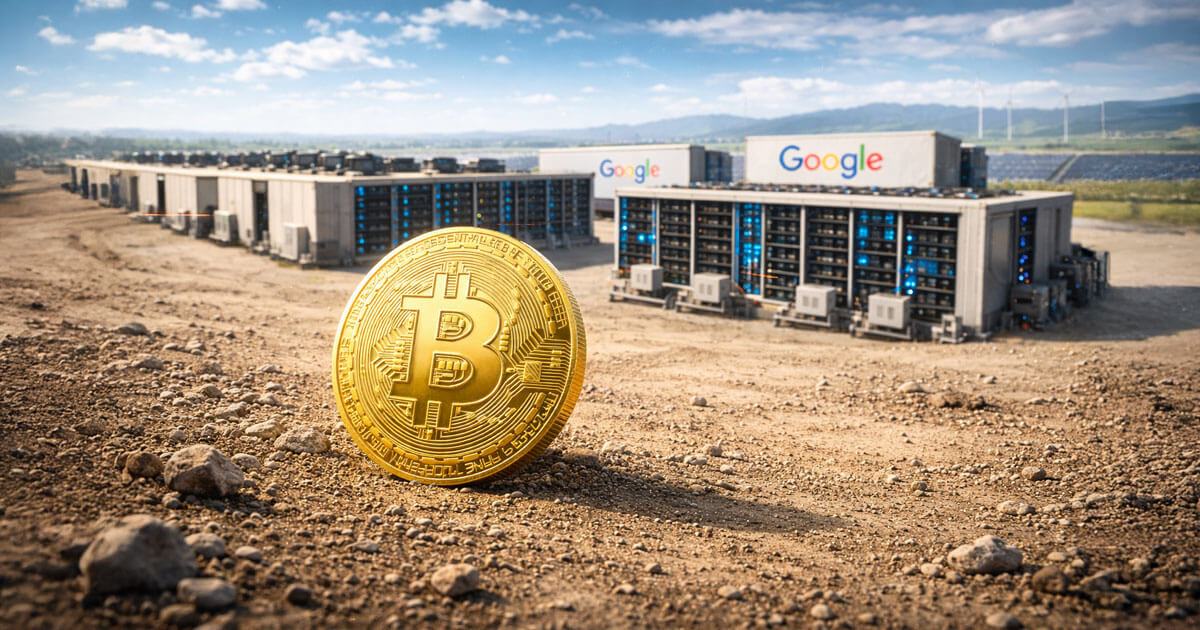
In a surprising turn of events, Google has emerged as a important player in the cryptocurrency arena, particularly for Bitcoin miners venturing into artificial intelligence (AI). Rather than acquiring mining companies outright, Google’s strategic move involves providing substantial credit support—amounting to at least $5 billion—to aid these miners in their AI initiatives.
Understanding the Partnership Dynamics

While many consider these collaborations as mere technology partnerships, the reality of the situation is rooted in credit engineering. In essence, Google’s financial backing allows these mining companies, often seen as less reliable, to appear more stable to lenders. This transformation enables them to be classified similarly to infrastructure sponsors instead of purely commodity producers.
The Mechanics Behind the Deals
The structure of these agreements is fairly straightforward. Bitcoin miners offer valuable assets such as energized land, high-voltage interconnections, and existing shell buildings. In these transactions, Fluidstack, a data-center operator, enters into multi-year colocation leases with the miners for the must-have IT power required for AI servers.
Subsequently, Google provides a safety net for Fluidstack’s lease obligations. This arrangement reassures conservative commercial banks, allowing them to consider these projects as infrastructure debt rather than speculative financing related to cryptocurrency.
Key Players and Significant Deals
TeraWulf’s Expansion
A notable example of this model is TeraWulf, which set a significant precedent with its Lake Mariner campus in New York. After an initial phase, the company announced an ambitious expansion plan, increasing its contracted capacity to over 360 megawatts. This deal is valued at approximately $6.7 billion, with the potential to reach around $16 billion through extensions. Notably, Google’s backing increased to $3.2 billion, giving it a substantial stake of about 14%.
Cipher Mining’s AI Commitment
Another key player, Cipher Mining, also leveraged Google’s support. The company secured a 10-year agreement for 168 megawatts of AI hosting with Fluidstack at its Barber Creek facility. This contract is touted to generate roughly $3 billion in revenue, bolstered by Google’s commitment to cover $1.4 billion of the lease obligations. In return, Google gained equity warrants convertible into approximately 5.4% of Cipher’s stake. (CoinDesk)
Hut 8 Corp.’s Strategic Lease
What’s more, Hut 8 Corp. expanded on this framework by announcing a 15-year lease with Fluidstack for 245 megawatts of IT capacity at its River Bend campus in Louisiana. This contract has a total value of about $7 billion, with major financing structured by JP Morgan and Goldman Sachs—an achievement made possible by Google’s financial backing of the lease obligations. You might also enjoy our guide on Unlocking Trillions with Confidential Lending in DeFi.
Why AI Leases Are More Promising Than Bitcoin Mining
These miners’ pivot to AI emerges as a response to declining mining profitability. According to CoinShares, the average cost to mine a single Bitcoin among listed miners is around $74,600, with total expenses, including depreciation, soaring to approximately $137,800. Given that Bitcoin trades around $90,000, miners’ margins are razor-thin, prompting them to seek more stable revenue avenues.
The shift towards AI and high-performance computing seems to be the answer, with public miners announcing over $43 billion in AI and HPC contracts in just one year. Such contracts allow Bitcoin miners to present themselves favorably to financial institutions since banks can treat long-term AI lease agreements as recurring revenue, a stark contrast to the volatile nature of Bitcoin income, which often fluctuates with network difficulty and block rewards.
Google’s Role as a Credit Enhancer
Google’s involvement plays a critical role in reducing perceived risks connected to these projects. By enhancing credit, it opens avenues for miners to access funding similar to traditional data center developers. For Google, this arrangement optimizes capital efficiency, allowing it to secure future access to computing power without carrying the full burden of constructing data center facilities.
Operational Risks and Challenges
While the financial strategy may make sense, the execution comes with its own set of challenges. Bitcoin miners have historically focused on the most cost-effective power solutions, while AI clients demand high-grade data center conditions, including stringent environmental controls and reliable service agreements. This shift from a “best-effort” mining approach to a rigorous reliability standard requires significant adjustments in both operational processes and infrastructure.

Counterparty Risks
What’s more, this arrangement introduces notable counterparty risks. The economic structure heavily depends on Fluidstack acting as the intermediary. The success of cash flows hinges on Fluidstack’s ability to maintain its AI clientele and ultimately on Google’s commitment to uphold its financial guarantees for an extended period. Any cooling in AI demand or tenant renegotiations could disrupt this delicate balance, leading to potential failures.
Broader Implications
The overarching effects of these agreements stretch beyond mere project financing and venture into competition policy and the long-term security of Bitcoin. By focusing on credit backstops instead of direct acquisitions, Google effectively aggregates must-have resources required for AI development. This strategy allows the tech giant to avoid the scrutiny associated with large asset purchases. For more tips, check out How Blockchain is Transforming Intellectual Property Managem.
However, if this model proliferates across multiple facilities, critics may argue that Google has created a “virtual utility.” While it may not directly own the infrastructure, it would still exert considerable influence over who can deploy significant computing resources. (Bitcoin.org)
Ultimately, Bitcoin faces a critical trade-off. Every megawatt diverted from mining activities to AI reduces the available power for securing the network, which could have longer-term ramifications for the cryptocurrency’s stability.
Conclusion
The partnership between Google and Bitcoin miners signifies a groundbreaking shift in the cryptocurrency world, blending traditional finance with advanced technology. As these miners adapt to the changing economic environment, their ability to navigate operational challenges will be important for the future of both Bitcoin and AI.
FAQs
1. How is Google supporting Bitcoin miners?
Google provides credit support to Bitcoin miners, allowing them to pursue AI projects without needing direct acquisitions.
2. Why are Bitcoin miners moving towards AI?
Miners are turning to AI to secure more stable revenue streams amid declining mining profitability.
3. What risks are associated with this partnership?
Operational and counterparty risks exist, especially regarding the reliability of power sources and the performance of Fluidstack.
4. How does this affect Bitcoin’s future?
Diverting power resources from mining to AI may decrease the energy available for Bitcoin mining, impacting its security.
5. Can this model influence competition regulations?
Yes, if scaled widely, Google’s approach may draw regulatory scrutiny over its influence in the AI and cryptocurrency sectors.
You Might Also Like



