
Big Tech’s $500B AI Buildout Could Be the Escape Hatch Bitcoin Miners Need
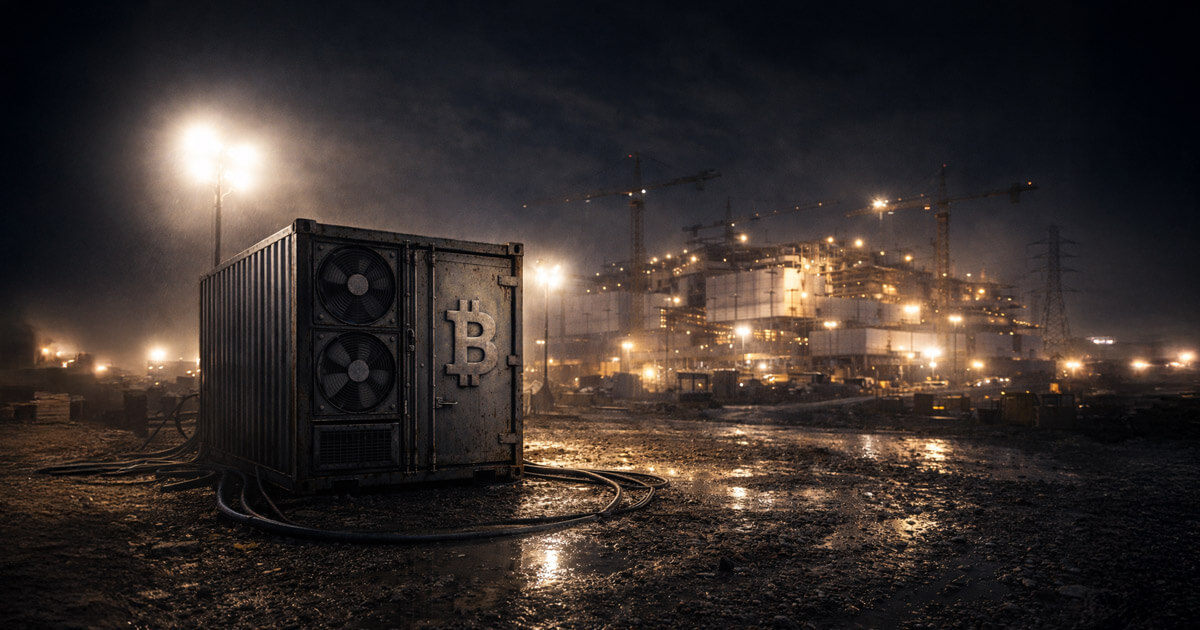

Direct answer: Big Tech’s roughly $500 billion AI infrastructure push could help struggling Bitcoin miners survive by turning their biggest advantage—power-ready sites, grid hookups, and operational know-how—into valuable data center capacity for AI and high-performance computing (HPC). Instead of relying only on volatile block rewards, some miners can pursue longer-term, contracted revenue by leasing space, power, and facilities to AI tenants or by partnering on new builds. That won’t save everyone, but it does change the math for miners who still control scarce energy infrastructure.
For years, Bitcoin mining was mostly a game of efficient machines, cheap electricity, and scale. Lately, though, the industry has felt like it’s been running uphill in the rain. Revenues swing with Bitcoin’s price, network difficulty keeps climbing, and costs don’t politely wait for the next bull market. Now, a surprising source of potential relief is emerging: the massive wave of AI spending from the biggest technology companies on the planet.
When companies like Alphabet (Google), Microsoft, and Meta talk about huge capital budgets for AI, it’s easy to picture one thing: chips. But the real bottleneck isn’t only GPUs. It’s power, land, cooling, permits, transmission, and the ability to bring a new facility online quickly. And that’s exactly where many Bitcoin miners—especially the larger, more industrial operators—already have a head start.

Focus Keyword: Bitcoin miners AI
Why AI spending matters to Bitcoin miners right now
AI has shifted from “cool product feature” to “national-scale infrastructure race.” Training and serving large models requires enormous compute density, and that compute density demands reliable electricity and serious cooling. The result is that data centers aren’t just competing for servers—they’re competing for megawatts.
Bitcoin miners understand this world better than most. They’ve been building power-hungry campuses for a decade, often in regions with favorable energy pricing and workable regulations. Many have already negotiated utility relationships, built substations, secured interconnections, and developed operations teams that can run industrial loads 24/7.
So when Big Tech signals it’s willing to spend hundreds of billions to expand AI capacity, it indirectly signals something else: power-ready infrastructure is going to be worth more. For miners whose margins have been squeezed, that’s not a small detail—it can be a lifeline.
Bitcoin mining’s profitability squeeze: what miners are up against
Let’s be honest: a lot of mining businesses are operating in survival mode. When Bitcoin’s price drops or stalls while difficulty stays high, the least efficient operators get forced into painful choices—shutting off rigs, selling equipment, raising emergency capital, or dumping BTC reserves to cover bills.
On-chain analytics firms often describe these periods as “capitulation,” meaning miners are under acute financial stress and weaker players are pushed out. While capitulation phases have sometimes aligned with market bottoms historically, that doesn’t make the process gentle. It can be brutal, and it can be final for companies that can’t refinance or reduce costs fast enough.
One of the clearest signals of stress is when miners move more BTC to exchanges. That doesn’t guarantee immediate selling, but it does increase the odds that supply hits the market. In soft demand conditions, extra supply can pressure price, which then pressures miners again. It’s a feedback loop that can feel inescapable.
Why “just wait for the next cycle” isn’t a strategy anymore
In past downturns, miners could sometimes hunker down and hope difficulty adjustments and price recovery would restore profitability. But the industry has matured. Debt structures are more common, infrastructure is more expensive, and competition is more professional. Waiting can mean bleeding out.
That’s why the AI boom is so relevant: it offers an alternate revenue path that doesn’t depend on block rewards alone. You might also enjoy our guide on Bitcoin’s Potential Bottom: Will Altcoins Follow Suit?.
AI’s real constraint isn’t chips—it’s infrastructure
Yes, GPUs are scarce. Yes, advanced chips are expensive. But even if you can buy the hardware, you still have to run it somewhere. AI facilities need:
- Large, reliable power (often tens to hundreds of megawatts per campus)
- Cooling capacity that can handle dense racks
- Grid interconnection and transmission planning
- Permitting and land suitable for industrial development
- Construction timelines that don’t stretch into “maybe next decade”
This is where Bitcoin miners can be unusually well-positioned. Many already control sites designed for high, continuous loads. Their buildings might need upgrades for AI (different racks, different cooling, different networking), but the hardest-to-get ingredient—power access—is often already in place.
For a deeper look at the scale of data center energy demand and planning challenges, the International Energy Agency has useful coverage of electricity and system impacts: https://www.iea.org/.
The “data center landlord” pivot: how miners can monetize what they already have
Not every miner will become an AI infrastructure company, but the pathway is increasingly clear. Think of it less like swapping ASICs for GPUs overnight and more like monetizing a scarce asset: a powered, connected site.
Common pivot models miners are exploring
- Leasing powered shells: The miner provides land, buildings, and power delivery; the tenant installs AI/HPC hardware.
- Co-development: Miner and partner build out a facility together, sharing capex and revenue.
- Hosting (colocation): The miner operates the facility and hosts customer compute equipment under contract.
- Hybrid sites: Keep some mining while dedicating a portion of capacity to HPC/AI workloads.
Here’s the key shift: mining revenue is inherently volatile, but data center contracts can be long-duration and predictable. If a miner can secure multi-year commitments, the business starts to look less like a speculative commodity operation and more like infrastructure.
Why Big Tech’s spending wave could accelerate these deals
When the largest technology firms commit huge budgets to AI, they don’t just buy equipment. They also set off a chain reaction across finance and construction:
- Demand becomes more credible: Builders and lenders take projects more seriously when hyperscalers signal long-term need.
- Infrastructure gets repriced: Power capacity, interconnections, and ready sites become more valuable.
- Partnerships become easier: A miner with a strong site can attract tenants, joint ventures, or credit support.
In other words, the AI buildout can convert what used to be “mining-only” infrastructure into a broader asset class. And that’s a big deal when miners are otherwise forced to sell BTC or shut down rigs.
Credit support and structured finance: the quiet major shift

Miners in distress often struggle to raise money on good terms. But AI-related projects can be financed differently—especially when there’s a credible counterparty and contracted cash flow. If a major cloud or enterprise customer is involved, lenders may view the project as lower risk than pure mining operations.
That doesn’t mean funding is guaranteed, and it doesn’t mean every miner gets a deal. It does mean the door is open in a way it wasn’t before.
What the $500B figure really signals for power markets
Huge AI capex budgets imply a long runway of demand for: For more tips, check out Bitcoin Supply Pressure Explained: Holder Cost Basis, Miner .
- New generation (gas, renewables, nuclear in some regions)
- Transmission upgrades and interconnection queues
- Demand response and flexible load strategies
Bitcoin miners have a history of operating as flexible loads—some participate in curtailment programs, some power down during grid stress, and some co-locate near generation. AI workloads are typically less flexible (you can’t always pause inference traffic), but there are still opportunities to design systems with redundancy and load management.
For background on U.S. grid reliability and the challenges of integrating large new loads, the U.S. Energy Information Administration is a solid reference: https://www.eia.gov/.
The catch: AI could also compete with mining for electricity
There’s a paradox here. If AI demand bids up power prices or absorbs available capacity in key regions, miners could face tougher economics. Even miners with decent contracts may see competition for new interconnections or expansion sites.
So why are some miners still hopeful? Because many already have what AI developers want most: near-term deliverability. If your site can be energized faster than a greenfield build, you’re not just competing on price—you’re competing on time.
Implications for Bitcoin’s network: a subtle long-term risk
If mining sites permanently transition to AI under long leases, that power and real estate may not return to mining quickly—even if Bitcoin profitability improves later. Difficulty adjustments can help the network rebalance when miners temporarily shut off, but they can’t magically recreate industrial capacity that’s been repurposed for the next 10–15 years.
That raises an uncomfortable question: could a large-scale shift of mining infrastructure into AI reduce future hashrate growth or change where mining concentrates geographically? It’s not a crisis today, but it’s something the ecosystem should watch, especially as energy infrastructure becomes more strategic.
What I’d watch next if you’re tracking this trend
If you’re trying to understand whether the “miner-to-AI” pivot is real or just a narrative, keep an eye on practical signals:
- Announcements about megawatt capacity and grid interconnections, not just “AI strategy” headlines
- Multi-year hosting or lease agreements with named counterparties
- Capex allocations toward cooling, networking, and building retrofits
- Financing structures that rely on contracted cash flows rather than BTC price assumptions
For many miners, the next chapter may be less about chasing the next generation of ASIC efficiency and more about becoming energy-and-compute infrastructure operators. That’s a big identity shift. But given the pressure they’re under, it might be the most realistic path forward.
FAQ
1) Can Bitcoin miners really convert mining sites into AI data centers?
Some can, but it’s not plug-and-play. The biggest advantage miners have is power access and operational experience. However, AI facilities often require different cooling, networking, and building layouts, so retrofits and new equipment are usually necessary.
2) Why does Big Tech’s AI spending help miners specifically?
Because the spending increases demand for scarce infrastructure—grid-connected power, permitted sites, and fast-to-deploy campuses. Miners that already control those assets can lease, host, or co-develop facilities and potentially earn steadier revenue than mining alone.
3) Will AI raise electricity prices and hurt mining?
It can. In regions where power is constrained, new AI loads may bid up prices or clog interconnection queues. That said, miners with long-term power agreements or already-built infrastructure may be better insulated than those still trying to expand.
4) Does miner “capitulation” mean Bitcoin’s price is about to rebound?
Not necessarily. Capitulation has sometimes occurred near cyclical lows, but it’s not a timing tool. It mainly signals that a portion of miners are under stress and may be forced to sell BTC or shut down, which can create volatility.
5) Could this pivot reduce Bitcoin’s security over time?
If a meaningful amount of mining capacity is permanently repurposed for AI under long leases, that could slow future hashrate growth or change the mining world. Bitcoin can adjust difficulty, but it can’t instantly replace industrial-scale power sites once they’re committed elsewhere.
Related Reading
- Bitcoin difficulty just printed a historic -11.16% — if the next epoch stays red, miners are in trouble
- Bitcoin Mining Profit Squeeze: Why Block Times Hit 20 Minutes and a 14% Difficulty Drop Could Bring Relief
- Bitcoin Price Forecast: Why Traders Still See a Dip Toward $60K–$50K Before the Next Big Move
You Might Also Like



