
Exploring Cloudflare’s tokio-quiche for QUIC and HTTP/3 in Rust

Introduction to tokio-quiche
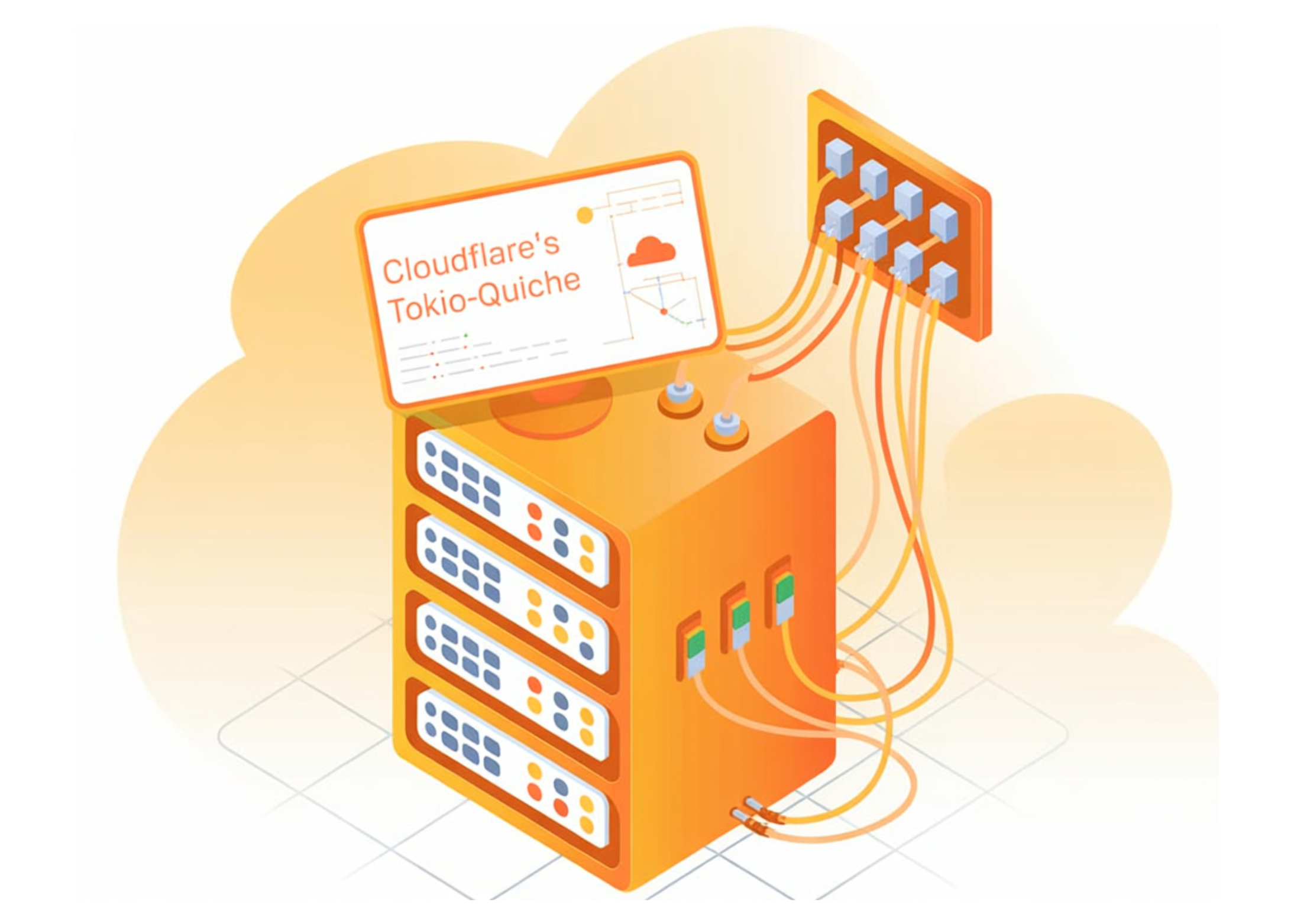
Cloudflare recently released tokio-quiche, an asynchronous Rust library designed for QUIC and HTTP/3. By integrating its powerful quiche implementation with the Tokio runtime, this library simplifies the process for Rust developers seeking to use these protocols efficiently. With its proven track record in high-demand environments, such as Apple iCloud Private Relay and WARP’s MASQUE client, tokio-quiche is set to make handling millions of HTTP/3 requests a breeze.
From quiche to tokio-quiche

The original quiche library serves as the foundation, offering a low-level implementation of QUIC and HTTP/3 in Rust. It encapsulates the critical components of the QUIC transport state machine—like connection establishment and flow control—without making assumptions about how input/output (IO) tasks are executed. However, using quiche directly requires developers to manage UDP sockets and datagrams manually, which can lead to a complex and error-prone integration process.
Enter tokio-quiche, which packages all this functionality into a user-friendly crate. By bridging the gap between the sans-IO design of quiche and the asynchronous capabilities of the Tokio framework, it provides a streamlined API that manages UDP sockets, routes packets, and communicates with the quiche state machine.
Understanding the Architecture of tokio-quiche
At its core, tokio-quiche employs an actor model on the Tokio runtime. This architecture consists of small, stateful tasks that communicate via message passing over channels, which is particularly well-suited for implementing protocols that require internal state management. You might also enjoy our guide on Bitcoin Eyes New Heights as Altcoins Prepare for a Surge.
The Role of the IO Loop Actor
The main component, known as the IO loop actor, is responsible for transferring packets between quiche and the UDP socket. A key message type used in this process is the Incoming struct, which describes the UDP packets received. The asynchronous integration operates in a consistent manner: the IO loop awaits new messages, converts them into inputs for quiche, advances the QUIC state machine, and then transforms the outputs into outbound packets to send back through the socket.
Key Tasks in tokio-quiche
For each UDP socket utilized, tokio-quiche creates two key tasks: (CoinDesk)

- InboundPacketRouter: This task manages the receiving end of the socket and directs incoming datagrams to the appropriate connection channels based on their destination connection IDs.
- IoWorker: Dedicated to each connection’s IO loop, this task coordinates a singular quiche connection, alternating between quiche calls and application-specific logic executed through ApplicationOverQuic.
This design strategically encapsulates the connection state within each actor, ensuring that QUIC processing remains separate from higher-level protocol code. For more tips, check out 5 Potential Trump Tariffs Impacting Bitcoin in 2026.
ApplicationOverQuic and H3Driver: Enhancing Protocol Flexibility
QUIC is versatile, capable of transporting multiple application protocols like HTTP/3, DNS over QUIC, and Media over QUIC. To ensure tokio-quiche isn’t limited to a single protocol, the Cloudflare team introduced the ApplicationOverQuic trait. This trait abstracts quiche methods and the underlying IO, offering higher-level events and hooks for various applications that implement these protocols. For instance, the HTTP/3 testing client, h3i, utilizes a non-HTTP/3 implementation of ApplicationOverQuic.
Building on this trait, tokio-quiche includes a specialized implementation called H3Driver. It connects quiche’s HTTP/3 features to the IO loop actor while converting raw HTTP/3 events into higher-level events, complete with asynchronous body streams, which are designed to be convenient for application-level code. H3Driver also offers variants—ServerH3Driver and ClientH3Driver—that extend server-side and client-side functionalities, respectively, providing the foundational elements for solid HTTP/3 servers and clients.
Real-World Applications and Future Directions
Before its public release, tokio-quiche had already been in use at Cloudflare for several years. It supports Proxy B in Apple iCloud Private Relay, HTTP/3 servers based on Oxy, and the WARP MASQUE client. Notably, the WARP client has transitioned from WireGuard-based tunnels to QUIC-based tunnels powered by tokio-quiche, showcasing its capability to handle millions of HTTP/3 requests per second effectively in production environments.
Cloudflare envisions tokio-quiche as a foundational tool rather than a in-depth HTTP/3 framework. The library provides low-level protocol capabilities along with example client and server event loops, allowing developers the flexibility to create tailored HTTP servers, DNS over QUIC clients, MASQUE-based VPNs, and additional QUIC applications. By making this crate available, Cloudflare aims to simplify the adoption of QUIC, HTTP/3, and MASQUE for Rust teams, ensuring that these implementations align with the same transport stack utilized in Cloudflare’s edge services.
Key Takeaways
- tokio-quiche combines quiche and Tokio: It’s an async Rust library that integrates Cloudflare’s sans-IO QUIC and HTTP/3 implementation with the Tokio runtime. This means developers don’t have to manually handle UDP and event loop tasks.
- Actor-based architecture enhances QUIC connections: The library employs an actor model where the InboundPacketRouter routes UDP datagrams by connection ID and the IoWorker manages a single quiche Connection per task, keeping the transport state separate and modular.
- ApplicationOverQuic trait enables protocol separation: This abstraction allows for various QUIC-based protocols like HTTP/3 and DNS over QUIC to be implemented on the same transport core, enhancing flexibility.
- H3Driver, ServerH3Driver, and ClientH3Driver: These components bridge quiche’s HTTP/3 functionalities to async Rust code, presenting HTTP/3 streams and bodies in a manner that integrates easily within typical Tokio-based services.
For more technical insights, check out the full technical details. You can also connect with us on Twitter, join our thriving community on SubReddit, or subscribe to our Newsletter. And don’t miss out—join us on Telegram!
You Might Also Like


