
Are Bitcoin Miners Transitioning to AI Infrastructure?
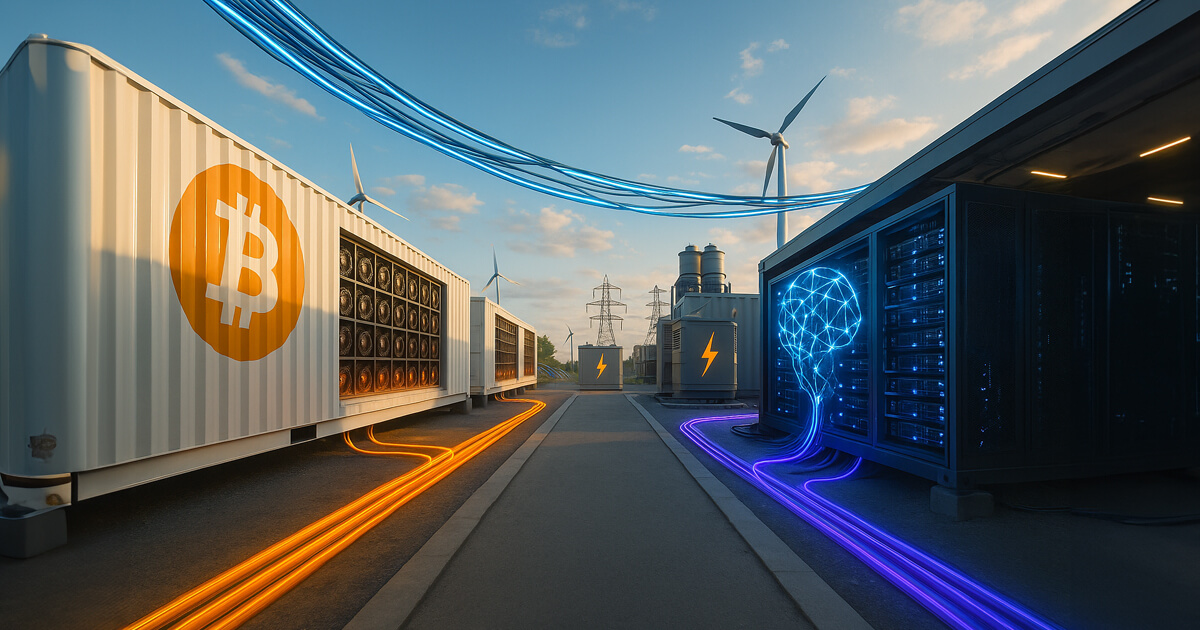

The Shift from Bitcoin Mining to AI Infrastructure
With Bitcoin’s recent halving in April 2024, miners are finding themselves at a crossroads. The block rewards have halved from 6.25 BTC to 3.125 BTC, leading to a reevaluation of their business models. Instead of solely banking on the traditional Bitcoin mining profits, many miners are now exploring opportunities in AI hosting. This shift helps them diversify their revenue streams and adapt to the evolving market of the crypto world.
Why Miners Are Leasing to AI Companies

As Bitcoin miners face pressure on their profit margins, leasing infrastructure to AI firms is becoming an attractive option. Major players like Core Scientific have signed contracts worth billions to provide significant power to AI companies. For example, Core Scientific has committed 500 megawatts to CoreWeave for an impressive $8.7 billion over the next 12 years. Cipher, on the other hand, has locked in a deal for 168 megawatts with Fluidstack, guaranteed by Google, amounting to $3 billion over a similar duration.
Revenue Generation: Mining vs. AI Hosting
Traditionally, Bitcoin mining revenue fluctuates alongside the hash price and coin price. In contrast, AI colocation contracts provide a more stable income per kilowatt-month. This reliability allows miners to convert their revenue from a volatile cryptocurrency model to a more predictable infrastructure-as-a-service model.
Understanding Hashprice and Its Implications
Hashprice, which measures miner revenue per petahash daily, is critical for understanding the financial health of mining operations. When this figure drops, miners often resort to selling Bitcoin to cover operational costs. Following the halving, the security budget—comprising block subsidies and fees in BTC—has experienced increased volatility, impacting miners’ overall profitability.
Financial Models in Transition
When the hash price sits at around $50 per petahash, a mining operation using Antminer S21 machines can generate approximately $119 per megawatt-hour (MWh) in revenue. However, after accounting for power costs, which are fixed, the cash margin dwindles. For instance, if the price of power is $50 per MWh, miners are left with a meager cash margin of $69 per MWh, making it challenging for operators to maintain profitability in a tough market. (CoinDesk)
The Benefits of AI Hosting
By pivoting to AI hosting, miners can establish dollar-denominated contracts that provide multi-year revenue stability. These agreements help mitigate the risk associated with fluctuating Bitcoin prices and the volatility of transaction fees. For example, Core Scientific’s deal with CoreWeave implies a hosting fee of around $121 per kilowatt-month. Such arrangements allow miners to regain some control over their revenue streams. You might also enjoy our guide on Bitcoin Price Predictions: What to Expect by 2024 Halving.
Reducing Exposure to Bitcoin Price Volatility
Consider a scenario where a 100-megawatt (MW) mining site shifts a portion of its capacity to AI hosting. This transition can significantly lower Bitcoin mining revenue exposure, allowing operators to stabilize their income. Instead of solely relying on Bitcoin prices, miners can secure contracts that promote consistent cash flow, providing a much-needed buffer during market downturns.
The Future of Bitcoin Mining and AI
As hashrate migrates towards AI hosting, it raises questions about the long-term implications for Bitcoin’s security budget and network dynamics. If a substantial portion of hashrate departs for AI hosting, the network hashrate could decline until difficulty adjusts. This could lead to an increase in hash price for remaining miners, creating a complex balancing act.
Strategic Considerations for Miners
Miners need to weigh their options carefully. While AI hosting contracts offer security and predictability, they also cap exposure to Bitcoin’s potential upside. If fee markets activate, miners that have transitioned to AI hosting might miss out on lucrative revenue surges while those who remain on SHA-256 could benefit from increased hash prices.

Identifying Winning Operators in the Space
Operators with low power costs, adequate expansion capabilities, and financial flexibility stand to gain the most from these transitions. Companies like Core Scientific have already demonstrated successful pivots towards AI hosting, especially after restructuring. Meanwhile, collaborations with creditworthy partners, like Cipher’s contract with Google, illustrate the importance of strong financial backing in this evolving market.
Risks and Challenges Ahead
While the potential for profit is enticing, there are genuine risks involved in transitioning. For example, changes in GPU cycles could leave miners with infrastructure that depreciates quickly. Smaller AI startups may present counterparty risks if they lack solid financial stability. On top of that, external pressures from grid politics, especially in regions like Texas, could complicate matters for miners leasing capacity to AI firms. For more tips, check out The Growing Need for Privacy in Cryptocurrency Tools.
Conclusion
As the cryptocurrency world continues to evolve, Bitcoin miners are adapting their strategies to embrace new opportunities in AI hosting. This transformation not only helps miners maintain cash flow but also positions them to navigate the complex dynamics of the crypto market more effectively. By building on their existing infrastructure, miners can diversify their revenue and reduce their dependence on Bitcoin’s price volatility. (Bitcoin.org)
FAQs
1. what’s the significance of the April 2024 Bitcoin halving?
The April 2024 halving reduced block rewards from 6.25 BTC to 3.125 BTC, significantly impacting miners’ revenue and prompting them to explore new business models.
2. How do Bitcoin mining and AI hosting compare financially?
Bitcoin mining revenue fluctuates with hash prices and Bitcoin prices, whereas AI hosting provides more stable, dollar-denominated contracts, reducing exposure to volatility.
3. What risks do miners face when transitioning to AI hosting?
Key risks include dependency on AI startups’ financial stability, potential changes in GPU cycles, and external regulatory pressures related to energy consumption.
4. How does the transition to AI hosting affect Bitcoin’s network security?
If a large portion of the hashrate transitions to AI hosting, it could lower the overall network hashrate temporarily, impacting miners still engaged in Bitcoin mining.
5. Will AI hosting replace Bitcoin mining in the future?
While AI hosting is becoming an attractive option, it’s unlikely to completely replace Bitcoin mining; instead, it offers a complementary revenue stream for miners.
Related Reading
You Might Also Like


