
Bitcoin’s 5% Era: The Future of Mining and Market Challenges
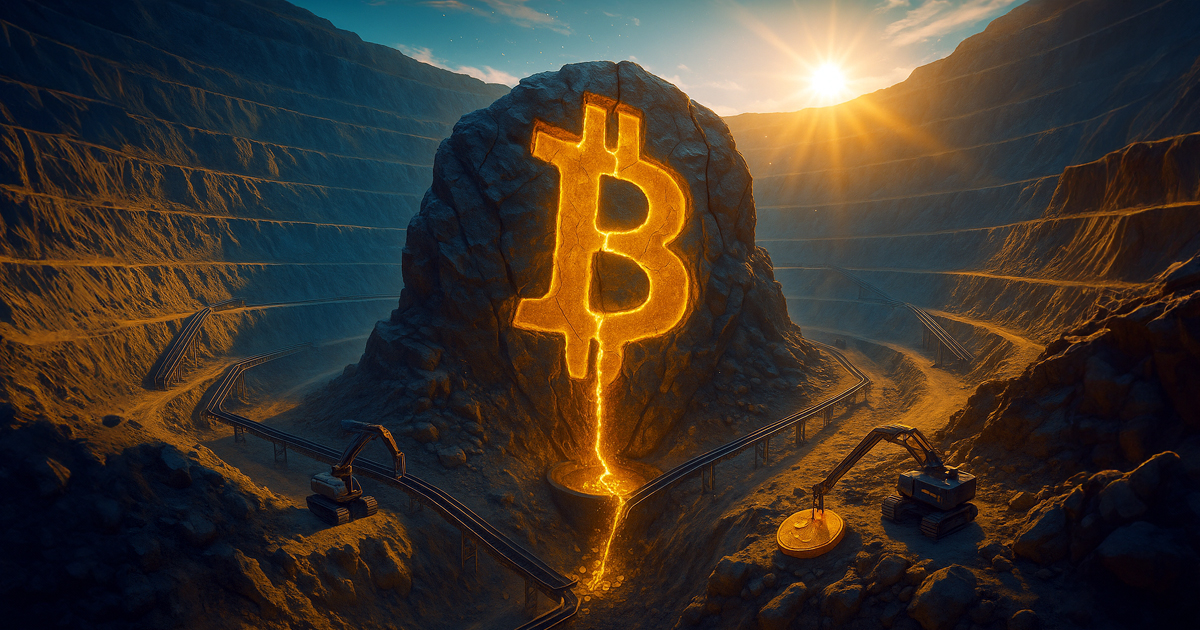

Bitcoin’s Milestone: Approaching the 5% Era
On November 17, Bitcoin reached a significant milestone, surpassing 19.95 million mined coins. This achievement pushes the cryptocurrency network beyond 95% of its total supply cap of 21 million BTC, leaving less than 1.05 million coins to be mined over the next century. However, while this moment might seem like a celebration of Bitcoin’s scarcity narrative, it also marks the start of a challenging phase for miners in what’s being referred to as the “5% Era.”
The Transition to a Scarcer Bitcoin

Bitcoin’s issuance is governed by a process known as halving, occurring every 210,000 blocks, or roughly every four years. Initially, miners could earn 50 BTC for each block mined. Fast forward to the April 2024 halving, and that reward has been reduced to just 3.125 BTC. This exponential decay means that while the supply is nearing its ceiling, the timeline for mining the final coins stretches out over a century, with the last Bitcoin not expected to be mined until around 2140.
This gradual reduction in supply fuels the investment thesis for many macro investors. They view Bitcoin as transitioning from a nascent, high-inflation asset to a more established commodity with a declining inflation rate that could eventually dip below that of gold.
The Implications for Miners
Despite the optimistic outlook for Bitcoin’s value, miners find themselves in a precarious situation. The era of generous subsidies that once characterized mining has come to an end, and this transition signals a looming revenue cliff for many operators. The operational costs associated with mining are growing, while rewards are shrinking, leading to a challenging economic environment.
Understanding the Miner’s Paradox
Currently, the industry is witnessing a phenomenon dubbed the “Miner’s Paradox.” Even with the price of Bitcoin hovering around $90,000, the block reward isn’t enough to cover the operational expenses for older mining fleets. Meanwhile, network difficulty remains high, with a hashrate close to 1.1 zettahash per second (ZH/s).
Usually, when revenue declines, inefficient miners exit the market, leading to a decrease in difficulty and a recovery in margins for those who remain. But that’s not happening now. Many miners are keeping their operations running at a loss or just breaking even, hoping for better market conditions. You might also enjoy our guide on Startale’s Soneium: A Japanese Layer-2 Blockchain Innovation.
Revenue Trends in the Mining Sector
Recent on-chain data indicates a troubling trend for miners. The average revenue has slipped to just over $37 million daily, a sharp drop from the $40 million-plus figures seen just months ago. This decline, combined with rising difficulty levels, places miners in a difficult position. (CoinDesk)
Shifts in the Mining Scene
Amidst these challenges, the mining industry is diverging into two camps. On one side are the “Pure Plays,” focusing solely on improving Bitcoin mining efficiencies. On the other are the “Hybrid Operators,” who are pivoting away from Bitcoin mining in search of more profitable ventures in the realm of Artificial Intelligence (AI).
Mining hardware and infrastructure can often be repurposed for High-Performance Computing (HPC) and AI model training, which can yield significantly higher revenues per megawatt-hour compared to Bitcoin mining. A study by VanEck predicted that Bitcoin miners could unlock up to $38 billion in additional annual revenue by reallocating just 20% of their power capacity to AI tasks.
Capital Flight and Industry Transformation
We’re already seeing some companies make this transition. Bitfarms, previously known for its aggressive Bitcoin operations, recently announced it would be winding down certain crypto activities in favor of AI computing. Other firms in regions like Texas and the Nordics are also retrofitting their operations to embrace the AI boom, which is indicative of a larger shift within the industry.

Future of Bitcoin Security
As the block subsidies decrease and mining pivots to AI, the question arises: what will ensure the security of the Bitcoin network in the coming decades? Satoshi Nakamoto originally designed Bitcoin to transition from block subsidies to transaction fees as the primary source of miner compensation. This principle suggests that as demand for block space grows, miners should still be able to sustain their operations.
However, the fee market remains shaky and unreliable. While new protocols like Inscriptions and Runes have briefly boosted fee revenue, the demand for blockspace often lags behind. If Bitcoin’s price doesn’t rise significantly following each halving, transaction fees will need to increase to fill the gap left by diminishing subsidies. As Ethereum researcher Justin Drake warns, if the security budget diminishes, it could lead to a systemic crisis within the broader crypto ecosystem. For more tips, check out Generative AI at an inflection point: What’s next for real-w.
The Challenges Ahead
As we approach Bitcoin’s 5% Era, it’s clear that the 95% supply milestone serves not as an endpoint but as the beginning of Bitcoin’s toughest period. The previous years of high inflation provided a sort of free ride for miners, but that’s now over. No longer can miners rely on easy profits; they must adapt to a new environment defined by efficiency, energy management, and strategic financial planning. (Bitcoin.org)
The path forward will likely see a significant consolidation in the mining industry. Those who manage to navigate these challenges successfully won’t just be miners but also energy entities and tech-driven companies. The struggle to extract the remaining million coins will undoubtedly shape Bitcoin’s future and influence its market price.
FAQs
what’s the 5% Era in Bitcoin mining?
The 5% Era refers to the phase in Bitcoin mining when less than 5% of the total supply (21 million BTC) remains to be mined. This period is characterized by increased operational costs and challenges for miners as block rewards diminish.
How does Bitcoin halving affect mining rewards?
Bitcoin halving occurs approximately every four years, reducing the block reward miners receive for validating transactions by 50%. This process significantly impacts miners’ revenue and overall profitability.
Why are miners shifting to AI?
Miners are turning to AI because it offers higher revenue potential compared to Bitcoin mining. The technology allows them to make use of existing infrastructure for more lucrative opportunities in data processing and computational tasks.
What will happen to Bitcoin’s security as subsidies decrease?
As block subsidies diminish, Bitcoin’s security will increasingly rely on transaction fees. If demand for block space doesn’t grow accordingly, the network’s security may be compromised, posing risks to the ecosystem.
What could the future of Bitcoin mining look like?
The future may see a consolidation of mining operations into larger, hybrid firms that balance Bitcoin mining with AI and other tech ventures, emphasizing energy efficiency and advanced computing capabilities.
You Might Also Like


