
The Future of Cryptocurrency Mining: Sell, Pivot, or Adapt?

Introduction
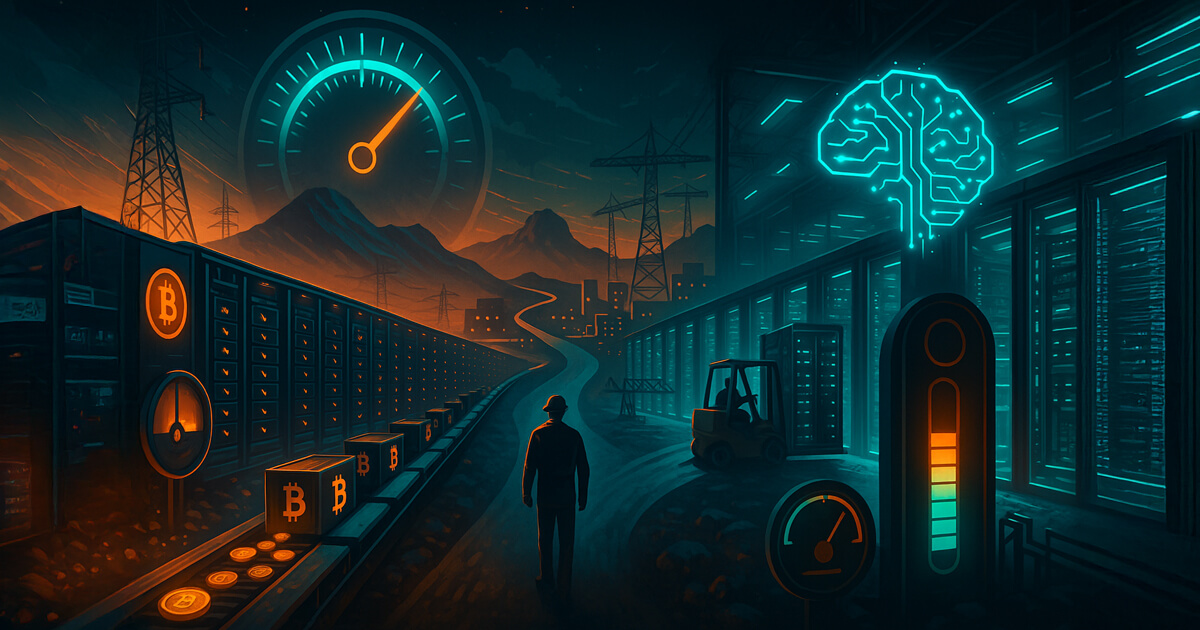
In the ever-evolving world of cryptocurrency, miners face tough choices. As of early September, Bitcoin’s network difficulty hit a staggering 136.04 trillion, while hash price fell to about $52 per petahash per day. This situation forces miners to consider whether to liquidate their holdings, simplify their operations, or switch to high-performance computing, particularly in the realm of artificial intelligence (AI).
The Current Mining Market

The backdrop for Bitcoin production is quite reliable. The average hashrate has reached nearly one zettahash per second, and transaction fees have been contributing slightly over 1% to block rewards recently. However, this mix of factors is squeezing profit margins, especially as power costs and data center rents continue to climb.
Power Costs and Data Center Rents
In the first quarter, global colocation prices averaged around $217.30 per kilowatt per month due to tight supply in key locations. Miners are feeling the pressure as these costs rise, which complicates their operational decisions. For more detailed insights on data center trends, you can refer to CBRE’s Global Data Center Trends 2025.
Strategic Choices for Miners
With shifting market dynamics, miners are evaluating their options. One notable development is CoreWeave’s acquisition of Core Scientific, valued at approximately $9 billion. This deal aims to consolidate around 1.3 gigawatts of capacity while allowing for future expansion.
The AI Opportunity
As demand for computational power rises, innovations in AI are becoming a key alternative for land and power resources which were traditionally allocated to proof-of-work mining. This shift is evident in the emergence of companies like American Bitcoin Corp, which recently began trading on Nasdaq as ABTC after merging with Gryphon Digital Mining. Their model focuses on accumulating assets while self-mining, potentially dampening the need for market sales.
Operational Strategies Amid Power Constraints
Power limitations and regulatory policies are shaping miners’ short-term strategies. For instance, in Texas, miners regularly reduce output during the Four Coincident Peak season to manage expenses and capture credits. This curtailment can offer temporary relief to hash prices but also highlights the increasing need for forward hedging.
Understanding Break-even Economics
It’s important for miners to comprehend the break-even economics. Negative margins can arise if hash prices fall and power costs rise. For example, consider the breakeven power prices based on current market conditions: You might also enjoy our guide on Qwen Deep Research: Revolutionizing Content Creation with AI.
- Efficiency Band, J/TH, Example Hardware, Illustrative Breakeven Power, c/kWh
- ~17.5, S21 class (stock), 7.0-7.5
- ~18.5, M60S class (stock), 6.5-7.0
- ~15-16, S21 with tuned firmware, 8.0-8.5
If fleets are paying above single-digit power rates, they might encounter financial strain if hash prices follow the downward trend. (CoinDesk)
Exploring New Revenue Streams
To counteract these pressures, miners are exploring new revenue avenues, including AI colocation and managed GPU services. Recent agreements have signaled a significant revenue potential, with TeraWulf anticipating over $3.7 billion from hosting contracts.
Comparing Revenue Streams
Here’s a breakdown of potential annual revenue from different power uses:

- AI colocation: $1.5M–$2.0M per MW based on announced deals
- Bitcoin mining: $0.9M–$1.3M per MW from current hash prices
This stark difference in potential earnings raises questions about whether miners should shift their focus. However, upgrading to AI colocation often requires significant capital investment, including liquid cooling systems.
Case Studies to Consider
Examining specific examples can shed light on the choices miners face. Iris Energy has successfully expanded its GPU capabilities and cloud revenue while continuing to mine Bitcoin. By adopting this dual strategy, they’ve been able to stabilize cash flows even amid market fluctuations.
The Path Forward
With increasing competition for resources, especially as companies like CoreWeave continue to consolidate, AI rents are likely to remain strong. This situation will weigh heavily on miners’ treasury decisions, particularly when Bitcoin’s fee share is low. For more tips, check out Deterministic CPUs: A New Era in Predictable AI Performance.
Conclusion: What Lies Ahead?
The pressing question for miners as we approach year-end is whether their balance sheets will serve as a source of supply. If current trends in hash prices continue, those miners operating at higher costs may need to liquidate assets or secure forward sales of their hashrate. (Bitcoin.org)
However, if AI colocation contracts ramp up, it could offset some of that selling pressure, as miners may reallocate resources toward higher-demand areas. The balance between these dynamics will ultimately shape the future of cryptocurrency mining.
Frequently Asked Questions (FAQs)
1. what’s the current Bitcoin mining difficulty?
The Bitcoin network difficulty reached 136.04 trillion as of September 4.
2. How is hash price affecting miners’ decisions?
As hash price decreases, miners must choose between selling their assets, consolidating, or pivoting to new revenue streams like AI.
3. Why are power costs important for miners?
Higher power costs can compress profit margins, making it challenging for miners to remain profitable.
4. what’s AI colocation?
AI colocation involves providing computing resources for artificial intelligence workloads, which can generate significantly higher revenues compared to traditional mining.
5. How can miners hedge against market fluctuations?
Miners can employ forward hedging and demand response programs to manage financial risks and stabilize revenue streams.


