
How AI is Transforming the Bitcoin Mining Landscape

Introduction
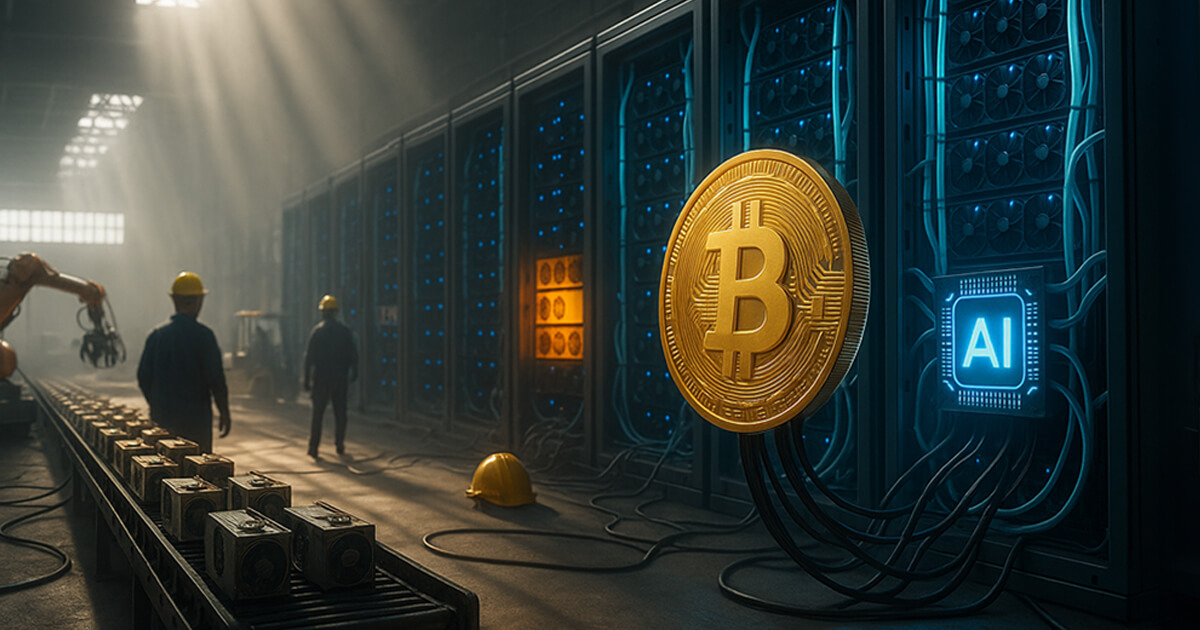
As the cryptocurrency market continues to experience fluctuations, Bitcoin miners are adapting by building on artificial intelligence (AI) to bolster their revenue streams. It’s reported that a significant portion of leading miners are already harnessing AI technology, allowing them to better navigate the challenges posed by a bear market.
The Shift in Mining Strategies

Seven out of the top ten Bitcoin miners, based on their hashrate, have initiated AI or high-performance computing (HPC) projects that are currently yielding profits. The remaining miners plan to adopt similar strategies, reflecting a broader trend in the industry.
Innovative Business Models
This innovative approach connects the miners’ existing infrastructure with contracted revenue from GPU clients, creating a secondary business line that competes effectively with traditional ASIC mining operations.
Case Studies in AI Integration
- TeraWulf: This miner has established two significant 10-year hosting agreements with Fluidstack, amounting to about 200 MW at their Lake Mariner facility. Google is backing some of Fluidstack’s lease obligations, which may translate to approximately $1.8 billion, highlighting the financial allure of such partnerships.
- Core Scientific: They’ve expanded their long-standing collaboration with CoreWeave to add around 70 MW of HPC capacity, set to be operational in the latter half of 2025.
- Bitdeer: This company continues to offer a commercial AI cloud service built on NVIDIA DGX systems, reflecting a growing trend among miners to diversify their services.
- CleanSpark: Recently secured 271 acres in Texas, aiming to develop a next-gen AI and HPC campus, indicating a commitment to future growth in this space.
Evaluating the Market
The economic rationale driving this shift revolves around efficient power usage and the predictability of revenue streams. Current data suggest that one MW of modern ASIC miners, operating at about 17 J/TH, can yield significant returns—up to $1.6 million per MW annually before expenses. This contrasts sharply with the revenue figures available from AI contracts, which can reach around $1.85 million per MW per year.
The Importance of Power and Utilization
The profitability of these ventures is determined by factors such as power prices, capital expenditures, and the overall utility of the contracts. Miners are now appealing to equity investors by emphasizing the stability offered by contracted AI hosting, which provides more predictable cash flows compared to the volatile mining fees. (CoinDesk)
Future Demand for Data-Center Power
According to McKinsey, the U.S. data center electricity consumption could reach about 606 TWh by 2030, driven largely by AI workloads. This growing demand is causing utilities to rethink their capital plans, with American Electric Power significantly increasing its budget to accommodate the surge in demand from data centers, as noted in a report by Reuters. You might also enjoy our guide on Identifying Promising Cryptocurrencies in 2025: A Comprehens.
Market Dynamics and the Changing Scene
The shift towards AI-focused operations is redefining the world for Bitcoin miners. The miners that effectively allocate new megawatts toward AI initiatives may show lower growth in headline hashrate compared to traditional operations. However, their enterprise values could increase due to contracted revenue and longer-term agreements.
The Future of Mining Operations
For instance, Core Scientific’s collaboration with CoreWeave signifies a long-term commitment to this model. Similarly, CleanSpark’s 285 MW plan and Marathon’s acquisition of Exaion are pushing miners towards integrated campuses where both GPUs and ASICs can coexist and share resources, significantly enhancing operational efficiency.
Challenges in Implementation
Despite these advancements, challenges remain. Factors such as ERCOT interconnection timelines, gas turbine availability, and transformer lead times can impact how quickly these high-density AI facilities become operational. What’s more, the supply of GPUs will play a vital role, as companies like Blackwell ramp up production to meet the growing demand from both AI and mining sectors.

Impact on Cryptocurrency Fundamentals
This pivot towards AI may slow the expansion rate of the Bitcoin network’s hashrate through 2026, as more new power is allocated to GPUs rather than ASICs. While the network will continue to grow as new sites come online, the overall rate of increase could be less steep compared to previous cycles.
Current Status of Major Bitcoin Miners
Here’s a snapshot of where some of the largest Bitcoin miners stand regarding AI and HPC engagement: For more tips, check out Vanguard Opens Crypto ETF Access: A Game Changer for Digital.
| Bitcoin Miner | Hashrate (EH/s) | % of Global Network | AI/HPC Involvement | Status |
|---|---|---|---|---|
| Marathon Digital Holdings | 57.4 | 5.3% | Acquiring 64% of EDF’s Exaion | Revenue |
| CleanSpark | 50.0 | 4.6% | Building 285 MW AI campus | Revenue |
| Iris Energy | 45.4 | 4.2% | Operates renewable-powered AI cloud | Revenue |
| Riot Platforms | 36.5 | 3.4% | Evaluating AI repurpose | Planning |
| Bitdeer Technologies | 35.0 | 3.2% | Running AI cloud service | Revenue |
Conclusion
The integration of AI within the Bitcoin mining sector isn’t just a trend; it’s a significant shift towards a more sustainable and profitable future. By adapting to market demands and changing technology landscapes, miners are positioning themselves to thrive in an increasingly competitive environment. (Bitcoin.org)
FAQs
1. How is AI affecting Bitcoin mining?
AI enhances operational efficiency and creates new revenue streams for Bitcoin miners, helping them adapt to market challenges.
2. What are the financial implications of AI integration?
AI hosting can generate higher annual revenue per MW compared to traditional mining, providing more predictable cash flows.
3. Are all Bitcoin miners adopting AI?
While many are exploring AI initiatives, some miners are still in the planning phases of integrating this technology into their operations.
4. How does data center demand impact Bitcoin miners?
The rising demand for data center power, particularly for AI applications, influences miners’ strategies and their profitability.
5. Will the shift to AI slow the growth of Bitcoin’s hashrate?
Yes, directing more power toward AI could reduce the rate of increase in Bitcoin’s hashrate until new ASICs come online.
You Might Also Like


