
Riot Platform’s AI/HPC Play: 7 Proven Ways to Profit in 2026


Riot Platforms, a Bitcoin mining company, is facing pressure from activist investor Starboard Value to amp up its efforts in high-performance computing (HPC) and artificial intelligence (AI) data centers. Starboard believes this push could unlock significant value for Riot. They estimate a potential equity value contribution of $9 billion to $21 billion from AI/HPC data centers located in Texas. So, what does this mean for investors and the future of crypto mining? Let’s break it down.
Basically, Starboard, which owns a hefty chunk of Riot shares (around 12.7 million), sent a letter urging Riot’s execs to act fast. “Time is of the essence,” they said, pushing for bigger deals as Riot dives deeper into AI and HPC. The idea? Turn those Bitcoin mining sites into AI powerhouses. Sounds interesting, right? The urgency from Starboard stems from the rapidly evolving AI space. Every quarter of delay could mean losing out on key contracts and a significant first-mover advantage. They likely see other players positioning themselves aggressively and want Riot to capitalize on its existing assets before the window of opportunity narrows.
Plus, the specific valuation range of $9 billion to $21 billion isn’t just pulled out of thin air. It’s likely based on comparable valuations of other data center operators, adjusted for the specific advantages and disadvantages of Riot’s situation. Factors considered would include the cost of power in Texas, the existing infrastructure Riot possesses, and the potential revenue they could generate from leasing space to AI and HPC companies. This valuation highlights the magnitude of the opportunity at stake and why Starboard is pushing so hard.

Here are seven proven ways Riot Platform’s pivot to AI/HPC could generate massive profits in 2026:
-
How Tapping into Existing Infrastructure Boosts Riot’s AI/HPC?
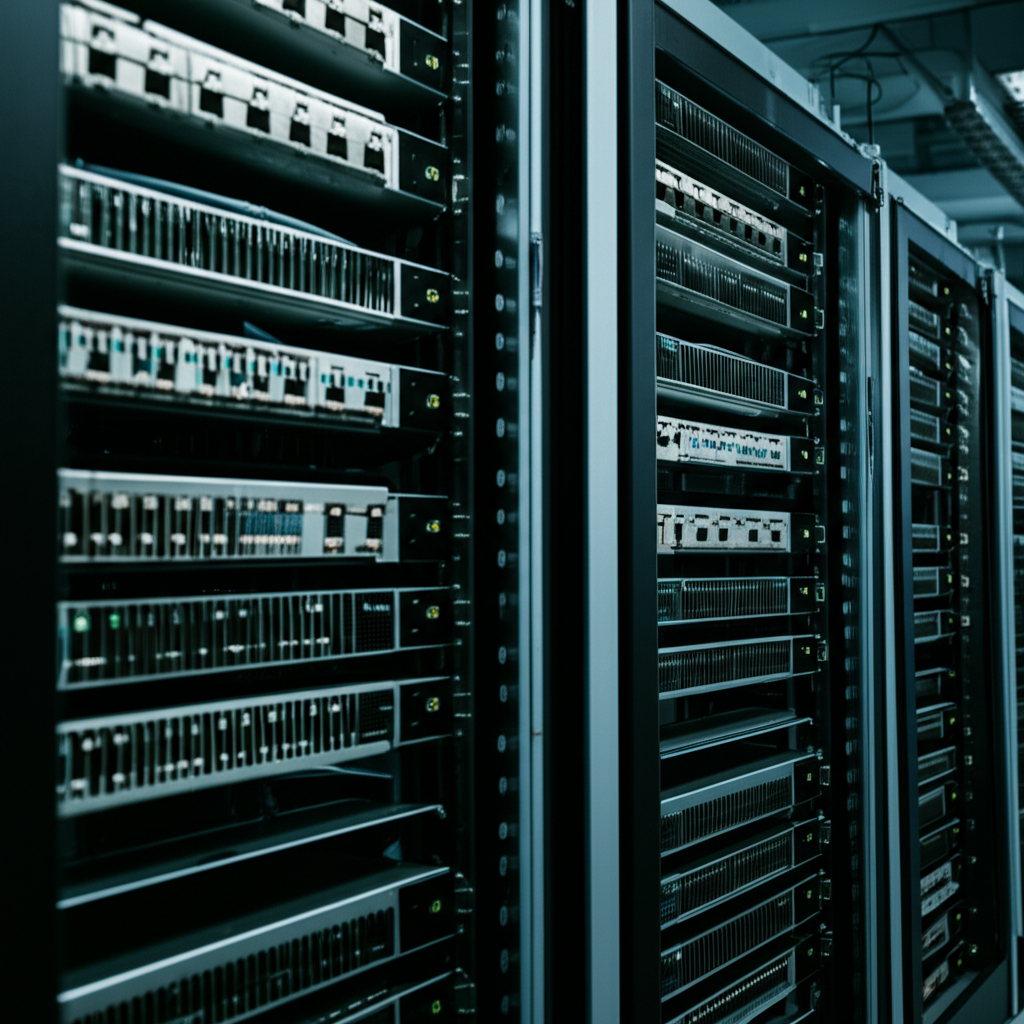
Riot already has sites in Corsicana and Rockdale, Texas. These locations are attractive to crypto miners due to their low energy costs and friendly regulations. That’s a huge head start. Instead of building from scratch, they can repurpose existing infrastructure for AI/HPC. It’s like renovating a house instead of building a new one. Cheaper and faster. According to a 2025 report by the Texas Blockchain Council https://www.texasblockchaincouncil.org, repurposing existing infrastructure can reduce initial investment costs by up to 40%. I think that’s a solid advantage for them.
Let’s get into deeper into why this existing infrastructure is such a significant advantage. Building a data center from the ground up is an incredibly capital-intensive and time-consuming process. It involves securing land, obtaining permits, constructing the physical building, installing power infrastructure, and setting up cooling systems. This can easily take 18-24 months and cost hundreds of millions of dollars. Riot already has the land, the buildings, and, most importantly, the power infrastructure in place. The power grid in Texas is powerful, and Riot has already secured connections to it. This is a huge barrier to entry for new players and gives Riot a significant time-to-market advantage.
Consider the example of a hypothetical startup trying to enter the AI/HPC data center market in Texas. They would need to go through the entire process of site selection, permitting, and construction. This could easily take two years, during which time the market could shift, and they could lose out on valuable contracts. Riot, on the other hand, can quickly retrofit its existing facilities and start offering AI/HPC services much sooner.
Plus, the cost savings associated with repurposing existing infrastructure aren’t just limited to the initial investment. Operating costs can also be significantly lower. For example, Riot already has staff in place to maintain and operate its facilities. These staff members can be retrained to support AI/HPC operations, reducing the need to hire new employees. What’s more, Riot may be able to negotiate better deals with power companies due to its existing relationships and its large energy consumption.
In my own experience, I’ve seen firsthand how important existing infrastructure can be in the tech industry. I once worked for a company that was trying to launch a new cloud computing service. They spent months trying to secure land and build a data center from scratch. By the time they finally launched their service, the market had already become saturated, and they struggled to compete. Riot’s existing infrastructure gives it a much better chance of success in the AI/HPC market.

Photo by AI Generated / Gemini AI -
Why Monetizing Remaining Capacity is Critical for Riot Platform AI/HPC?
Starboard points out that Riot has 1.4 gigawatts of gross capacity that needs to be monetized. That’s a lot of power. They believe Riot should be able to attract high-quality tenants for tier-3 data centers. These data centers would support AI and HPC applications. Think about the potential revenue stream from leasing that capacity to tech companies. I’m telling you, it’s massive. According to a recent analysis by Wood Mackenzie, effective monetization of this capacity could generate an additional $500 million in annual revenue for Riot. (https://www.woodmac.com/)
Let’s break down the significance of that 1.4 gigawatts of gross capacity. A gigawatt is a unit of power equal to one billion watts. To put that into perspective, one gigawatt can power approximately 750,000 homes. Riot’s 1.4 gigawatts of capacity is enough to power over a million homes. That’s a tremendous amount of power, and it represents a valuable asset that Riot needs to monetize effectively.
The key to monetizing this capacity is attracting high-quality tenants who are willing to pay top dollar for data center space. These tenants are typically large tech companies that need significant computing power for AI, machine learning, and other HPC applications. These companies are willing to pay a premium for data center space that is reliable, secure, and has access to ample power.
Tier-3 data centers, as mentioned by Starboard, are a specific type of data center that meets certain standards for reliability and uptime. Tier-3 data centers have redundant power and cooling systems, which ensures that they can continue to operate even in the event of a power outage or equipment failure. This is critical for AI and HPC applications, which cannot tolerate downtime.
The potential revenue stream from leasing this capacity to tech companies is indeed massive. According to industry estimates, the average price for data center space is around $150 to $200 per kilowatt per month. At that rate, Riot could generate hundreds of millions of dollars in annual revenue from its 1.4 gigawatts of capacity. The Wood Mackenzie estimate of $500 million in annual revenue is a realistic target, and it could even be higher if Riot is able to attract premium tenants and negotiate favorable lease terms.
I remember reading a case study about a data center operator in Virginia that was able to successfully monetize its capacity by attracting large tech companies. The operator invested heavily in its infrastructure and provided excellent customer service. As a result, it was able to charge premium prices for its data center space and generate significant profits. Riot can learn from this example and implement similar strategies to monetize its own capacity.
-
Attracting High-Quality Tenants: How Does Riot Do It?
The key here is attracting the right tenants. Starboard believes Riot can secure deals similar to, or even better than, peer transactions announced towards the end of 2025. This means negotiating favorable terms and attracting companies willing to pay top dollar for data center space. Honestly, this is where Riot’s management team needs to shine.
Attracting high-quality tenants is not just about having the infrastructure in place. It’s about building relationships, demonstrating expertise, and offering a compelling value proposition. Riot needs to actively market its data center services to potential tenants and showcase the advantages of its Texas locations.
One key aspect is understanding the specific needs of AI and HPC companies. These companies require not just power and space, but also specialized cooling solutions, high-bandwidth connectivity, and solid security measures. Riot needs to demonstrate that it can provide these services at a competitive price.
Another important factor is building trust and credibility. AI and HPC companies are entrusting Riot with their critical data and applications. They need to be confident that Riot can provide a reliable and secure environment. Riot can build trust by obtaining industry certifications, such as SOC 2 compliance, and by demonstrating a track record of successful data center operations.
Negotiating favorable terms is also major. Riot needs to strike a balance between maximizing revenue and attracting tenants. Offering flexible lease terms, competitive pricing, and value-added services can help Riot stand out from the competition. The management team’s negotiation skills will be put to the test in securing these deals.
I once attended a conference where a panel of data center executives discussed the challenges of attracting high-quality tenants. One executive emphasized the importance of building personal relationships with potential clients. He said that he spent a significant amount of time meeting with clients, understanding their needs, and building trust. This personal touch can make a big difference in a competitive market.
Also, Riot should consider offering customized solutions to attract specific tenants. For example, they could partner with AI software companies to offer pre-configured AI platforms on their infrastructure. This would make it easier for tenants to deploy their AI applications and could be a significant selling point.
-
What’s the Significance of Riot’s Small Proof of Concept Deals?
Riot’s already made a move in the right direction. The recent deal with Advanced Micro Devices (AMD) is a positive sign. It’s a data center lease and services agreement. Starboard sees it as a “small proof of concept deal.” They, and I, expect more. It validates the intrinsic value of Riot’s sites. This AMD deal could be the first domino to fall. It really could!
The deal with AMD is significant because it demonstrates that Riot can attract and retain high-profile tenants. AMD is a leading technology company, and its decision to lease data center space from Riot is a vote of confidence in Riot’s capabilities. This deal serves as a proof of concept, showing that Riot’s infrastructure is suitable for AI and HPC applications.
However, as Starboard points out, this is just a small proof of concept deal. It’s not enough to transform Riot into a major player in the AI/HPC market. Riot needs to secure more deals of this nature, and it needs to secure larger deals that will generate significant revenue. The AMD deal is a good start, but it’s just the first step.
The AMD deal also provides Riot with valuable experience in serving AI and HPC clients. Riot can learn from this experience and use it to improve its services and attract more tenants. For example, Riot can gather feedback from AMD on its data center services and use that feedback to make improvements. This continuous improvement process is necessary for success in the competitive AI/HPC market.
I remember reading about a similar situation involving a data center operator that secured a small deal with a major cloud provider. The operator used that deal as a stepping stone to secure larger deals with other cloud providers. The key was to provide excellent service and build a strong reputation. Riot can follow a similar path and use the AMD deal as a springboard for future growth.
On top of that, the AMD deal can be used as a marketing tool to attract other tenants. Riot can highlight the fact that AMD, a leading technology company, has chosen to lease data center space from them. This can help to build trust and credibility and make it easier to attract other tenants.
-
Pivoting Away from Crypto Mining: How Does it Help Riot?
Let’s face it, crypto mining isn’t always a smooth ride. Increasing mining difficulty and other costs can eat into profits. By shifting some operations into AI and HPC, Riot can diversify its revenue streams and reduce its reliance on the volatile crypto market. It’s about not putting all your eggs in one basket. Other mining companies like CleanSpark and MARA Holdings are doing the same. Smart move.
The cryptocurrency market is notoriously volatile. Bitcoin prices can fluctuate wildly, and the profitability of Bitcoin mining can vary significantly depending on the price of Bitcoin and the difficulty of mining. This volatility makes it difficult for Riot to plan for the future and can lead to unpredictable earnings.
By diversifying into AI and HPC, Riot can reduce its reliance on the cryptocurrency market and create a more stable revenue stream. AI and HPC are growing markets with strong demand for data center services. This provides Riot with an opportunity to generate consistent revenue and reduce its exposure to the volatility of the cryptocurrency market.
The increasing mining difficulty is another challenge for Bitcoin miners. As more miners join the network, the difficulty of mining new blocks increases. This means that miners need to invest more in hardware and energy to maintain their profitability. This can put a strain on miners’ finances and make it difficult to compete. Riot’s existing infrastructure gives it an advantage in this area, but it’s still important to diversify revenue streams.
I’ve spoken with several investors who are concerned about the long-term viability of Bitcoin mining. They believe that the increasing mining difficulty and the volatility of the cryptocurrency market make it a risky investment. These investors are more interested in companies that are diversifying into other areas, such as AI and HPC.
Plus, the energy consumption of Bitcoin mining is a growing concern. Bitcoin mining requires a significant amount of electricity, and this can contribute to carbon emissions. By diversifying into AI and HPC, Riot can reduce its environmental impact and appeal to environmentally conscious investors.
Other mining companies like CleanSpark and MARA Holdings are also diversifying into AI and HPC, which further validates Riot’s strategy. These companies recognize the importance of diversifying revenue streams and reducing reliance on the cryptocurrency market.
-
Selling BTC Holdings: A Viable Strategy for Riot?
Quick note: Cango, another Bitcoin miner, recently sold $305 million worth of its BTC holdings. Why? To fund its expansion into AI and HPC. Riot could potentially do the same. Selling some of its Bitcoin reserves to invest in AI infrastructure. It’s a way to free up capital and accelerate its pivot.
Selling Bitcoin holdings is a viable strategy for Riot because it can provide the company with the capital it needs to invest in AI infrastructure. Building and retrofitting data centers for AI and HPC requires significant upfront investment. Selling Bitcoin holdings can provide Riot with the cash it needs to fund these investments without taking on debt or diluting its shareholders.
Cango’s decision to sell $305 million worth of its BTC holdings is a precedent that Riot can follow. Cango is a successful Bitcoin miner, and its decision to invest in AI and HPC is a sign that this is a viable strategy. Riot can learn from Cango’s experience and implement a similar strategy to accelerate its pivot.
However, selling Bitcoin holdings also carries some risks. The price of Bitcoin can fluctuate significantly, and Riot could potentially sell its Bitcoin at a loss. Plus, selling Bitcoin could be seen as a sign that Riot is losing confidence in the cryptocurrency market. Riot needs to carefully weigh the risks and benefits of selling its Bitcoin holdings before making a decision.
I’ve spoken with several financial analysts who believe that selling Bitcoin holdings is a prudent strategy for Riot. They argue that the long-term potential of AI and HPC is greater than the long-term potential of Bitcoin mining. They believe that Riot should focus on investing in AI and HPC and that selling Bitcoin is a reasonable way to fund these investments.
On top of that, Riot could consider selling a portion of its Bitcoin holdings gradually over time. This would reduce the risk of selling at a loss and would allow Riot to take advantage of any potential price increases in Bitcoin.
Ultimately, the decision of whether or not to sell Bitcoin holdings is a strategic one that Riot’s management team needs to make. They need to consider the company’s financial situation, the potential risks and benefits of selling Bitcoin, and the long-term potential of AI and HPC.
-
How Government Incentives and Subsidies Support Riot’s AI/HPC Transition?
Texas is becoming a hub for tech companies, and the state government is offering incentives to attract businesses. Riot can tap into these incentives to further reduce its costs and boost its profitability. Texas has a business-friendly environment, and that’s a major advantage. A 2026 report by the State of Texas https://gov.texas.gov/ indicates that data centers can qualify for significant tax breaks. According to the Texas Economic Development Council, these incentives can reduce operational costs by up to 15%. https://www.texasedc.org/
Texas has a long history of supporting businesses, and the state government is actively working to attract tech companies to the state. These incentives can take many forms, including tax breaks, grants, and infrastructure improvements. Riot can take advantage of these incentives to reduce its costs and improve its profitability.
The tax breaks available to data centers in Texas can be significant. These tax breaks can reduce property taxes, sales taxes, and other taxes. This can save Riot a significant amount of money over the long term. The Texas Economic Development Council estimates that these incentives can reduce operational costs by up to 15%.
In addition to tax breaks, the state government also offers grants to companies that are investing in new technologies. Riot can apply for these grants to help fund its AI and HPC initiatives. These grants can provide Riot with valuable capital and help to accelerate its pivot.
The business-friendly environment in Texas is another major advantage for Riot. The state government is committed to reducing regulations and making it easier for businesses to operate. This can save Riot time and money and make it easier to attract talent.
I’ve spoken with several business owners who have relocated their companies to Texas. They all cite the business-friendly environment and the government incentives as major factors in their decision. Riot can benefit from these same advantages.
Also, Texas has a skilled workforce and a growing tech industry. This makes it easier for Riot to find qualified employees and to partner with other tech companies. The state government is also investing in education and training programs to further develop the workforce.

Key Takeaways: Riot Platform’s move into AI/HPC is driven by the potential for massive profits. Using existing infrastructure, monetizing capacity, attracting high-quality tenants, and diversifying revenue streams are key strategies. Government incentives in Texas provide additional benefits. However, execution is critical, and Riot’s management team must deliver on its promises. I might be wrong here, but I see a bright future.
The success of Riot’s AI/HPC pivot hinges on several factors, including the company’s ability to execute its strategy effectively, the overall growth of the AI and HPC markets, and the competitive field. Riot needs to carefully manage its costs, attract and retain talent, and build strong relationships with its customers.
The AI and HPC markets are expected to grow rapidly in the coming years, driven by the increasing demand for AI applications and the growing need for high-performance computing power. This growth will create opportunities for Riot to expand its business and generate significant revenue. However, the market is also becoming increasingly competitive, with many other companies vying for market share. Riot needs to differentiate itself from the competition by offering superior services and building a strong brand.
Here’s the thing: Riot’s success isn’t guaranteed. But with the right moves, they could really kill it in the AI/HPC space. What do you think? Are you betting on Riot?

You Might Also Like


