
Huawei’s Revolutionary AI Chip Strategy: SuperPoD Architecture Explained

Understanding Huawei’s AI Chip Innovations
Huawei is transforming the market of artificial intelligence with its innovative SuperPoD architecture. This technology allows thousands of AI chips to function as one cohesive unit, revolutionizing how we perceive AI computing. By enhancing interconnectivity and scalability, Huawei aims to change the way industries deploy AI systems.
The Concept of SuperPoD

The SuperPoD architecture showcases Huawei’s ambition to create a unified AI infrastructure. Instead of relying on traditional servers that work independently, Huawei’s approach connects multiple AI chips to act as a single, powerful computer. This shift is significant for both technical performance and how AI can be integrated into various sectors.
UnifiedBus 2.0: The Backbone of Innovation
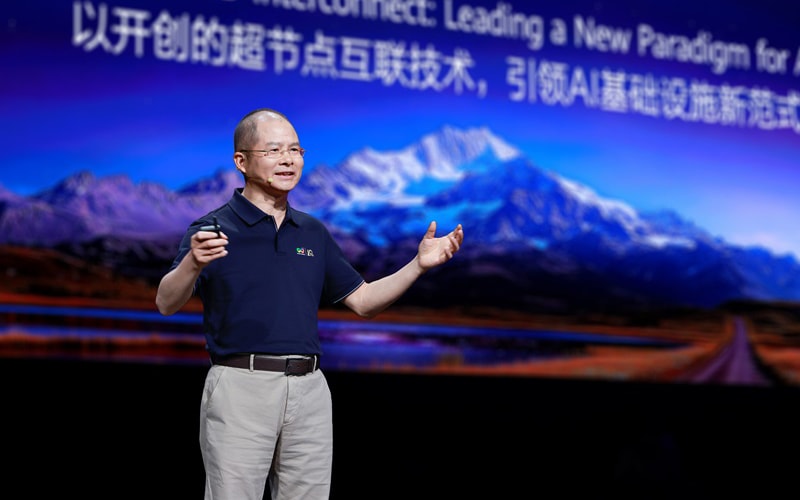
At the core of this architecture lies the UnifiedBus 2.0 protocol. According to Huawei’s Director, Yang Chaobin, this protocol allows for deep interconnection among physical servers, enabling enhanced learning and reasoning capabilities. The UnifiedBus addresses common challenges in AI computing, particularly issues of reliability and communication latency.
Traditional methods using copper connections may offer high bandwidth, but they’re limited by distance. In contrast, optical cables can cover longer ranges but often encounter reliability issues. Huawei’s solution to this dilemma involves a full approach to connectivity, ensuring consistent performance across all layers of communication.
Performance Metrics of SuperPoD
The Atlas 950 SuperPoD epitomizes this architecture, featuring up to 8,192 Ascend 950DT chips. It boasts extraordinary performance metrics, with capabilities of achieving 8 EFLOPS in FP8 and 16 EFLOPS in FP4. To put this into perspective, the interconnect bandwidth of this setup exceeds 10 times the total peak internet bandwidth globally.
Physical Footprint and Memory Capacity
Occupying 160 cabinets over a 1,000m² area, the Atlas 950 SuperPoD connects 128 compute cabinets and 32 communications cabinets through all-optical interconnects, achieving a memory capacity of 1,152 TB. With a latency of just 2.1 microseconds across the system, the performance is designed for demanding applications. You might also enjoy our guide on Exploring the Future of Decentralized GPU Networks in AI.
Future Developments: The Atlas 960 SuperPoD
Looking ahead, Huawei plans to introduce the Atlas 960 SuperPoD, set to incorporate 15,488 Ascend 960 chips within 220 cabinets across 2,200m². This upgraded system promises to deliver 30 EFLOPS in FP8 and 60 EFLOPS in FP4, along with an impressive 4,460 TB of memory and an interconnect bandwidth of 34 PB/s. (CoinDesk)
Beyond AI: Versatile Computing Applications
The benefits of SuperPoD architecture extend beyond artificial intelligence. The TaiShan 950 SuperPoD, built on Kunpeng 950 processors, offers solutions for enterprises seeking alternatives to outdated mainframes and mid-range servers. This is especially beneficial in sectors like finance, promising a viable substitute for legacy systems such as Oracle’s Exadata database servers.
Open Architecture Strategy
Huawei’s decision to release UnifiedBus 2.0 as open standards marks a strategic move in the AI infrastructure market. Yang highlighted the importance of fostering an ecosystem where partners can develop tailored SuperPoD solutions, enhancing innovation across industries.
By open-sourcing hardware components like NPU modules and software tools such as the CANN compiler, Huawei is paving the way for collaborative development. This approach not only addresses the challenges posed by the current semiconductor scene but also allows for broader participation in the AI infrastructure ecosystem.

Real-World Applications and Market Impact
With over 300 Atlas 900 A3 SuperPoD units shipped in 2025, Huawei’s innovations are already making waves across multiple sectors, including finance, manufacturing, and telecommunications. This real-world deployment validates their technical claims and indicates a significant shift in China’s AI infrastructure, positioning Huawei as a key player.
By fostering an open ecosystem, Huawei isn’t only addressing domestic technology challenges but also offering a competitive alternative to the proprietary systems common among Western companies. The question remains: can this collaborative approach maintain performance and commercial viability? For more tips, check out Noonoouri: A New Era in Music with AI and Virtual Influencer.
The Future of AI Infrastructure
Huawei’s SuperPoD architecture represents more than an incremental upgrade in AI computing; it suggests a reimagining of how vast computational resources are interconnected and managed. The open-source release of their designs will test whether this ecosystem can stimulate innovation and reshape global market dynamics. (Bitcoin.org)
Conclusion
Ultimately, Huawei’s ambitious vision for AI and computational infrastructure may redefine how industries use these technologies. By focusing on collaboration and openness, they aim to create an environment where innovation thrives. The impact of these advancements will be felt across various sectors, potentially changing the future of AI as we know it.
FAQs
what’s Huawei’s SuperPoD architecture?
The SuperPoD architecture allows thousands of AI chips to work together as one cohesive system, improving efficiency and scalability in AI computing.
How does UnifiedBus 2.0 enhance AI performance?
UnifiedBus 2.0 improves interconnectivity among servers, addressing challenges like latency and reliability, which are critical for large-scale AI applications.
What are the key performance metrics of the Atlas 950 SuperPoD?
The Atlas 950 SuperPoD can achieve 8 EFLOPS in FP8 and 16 EFLOPS in FP4, with an interconnect bandwidth of 16 PB/s.
How does the TaiShan 950 SuperPoD differ from AI-focused models?
The TaiShan 950 is designed for general-purpose computing, addressing needs in industries like finance by providing alternatives to legacy systems.
what’s the significance of Huawei’s open architecture strategy?
This strategy promotes innovation by allowing other companies to develop their own solutions based on Huawei’s specifications, fostering a collaborative ecosystem.
Worth Checking Out: Bitcoin Supply Pressure Explained: Holder Cost Basis, Miner Stress, and ETF Flows


