
The Quiet Resolution of Ethereum vs. Solana: A Shift in Blockchain Dynamics

Introduction
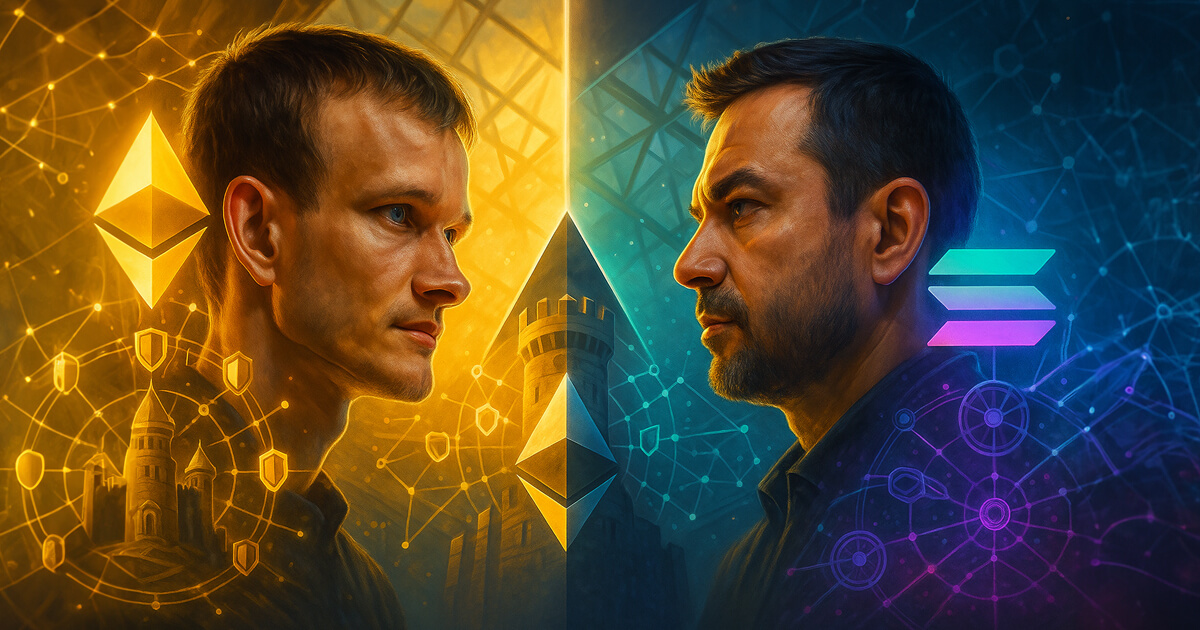
In the ever-evolving field of blockchain technology, the competition between Ethereum and Solana has garnered much attention. Their contrasting approaches to architecture have shaped their respective paths significantly. Instead of a dramatic showdown, the rivalry has quietly transformed into a nuanced understanding of what each platform offers in 2026. So, which blockchain reigns supreme? It really depends on your needs and use cases.
The Diverging Paths of Ethereum and Solana

Ethereum’s evolution has seen it grow into a modular settlement layer, effectively treating its base layer as infrastructure for other applications, particularly layer-2 rollups. In contrast, Solana has focused on maintaining a monolithic architecture that prioritizes high throughput.
Ethereum’s Modular Rollup Strategy
Ethereum’s approach allows for off-chain execution, where transactions are processed using rollups. This means that while it may take longer for transactions to reflect on the mainnet, the base layer is streamlined to enhance security and scalability. The rollups, such as Arbitrum and Optimism, handle transaction sequencing and can process blocks significantly faster than the mainnet itself.
Solana’s Monolithic Throughput
On the other hand, Solana employs a unified ledger system that enables rapid transaction processing. With its proof-of-history protocol, transactions are sequenced and confirmed almost instantly. Solana’s architecture boasts sub-second slot times, allowing users to see their transactions confirmed in less than a second. However, this comes with its security trade-offs.
Transaction Speed vs. Security
While both networks provide the appearance of instantaneous transactions, a deeper analysis reveals differing security mechanisms. The question for developers in 2026 isn’t just about speed but about the efficiency of each system for practical applications.
Understanding Transaction Confirmation
In Solana, confirmation occurs as soon as two-thirds of the network votes on a block, which generally takes under half a second. Economic finality is achieved in around 12 seconds, making it attractive for users who prioritize speed. (CoinDesk)
Conversely, Ethereum’s transaction confirmation is more involved. Rollups can achieve soft finality as soon as a transaction is accepted, but economic finality could take longer due to challenge periods. For example, optimistic rollups impose a seven-day withdrawal window, while zero-knowledge rollups can reduce this to mere minutes. You might also enjoy our guide on WLD Price Forecast: Targeting $0.67 by January 2025 as World.
Impacts on User Experience
The architectural differences between Ethereum and Solana affect how each platform manages congestion and fees, which can greatly influence user experience.
Solana’s Fee Structure and Congestion Management
- Fixed Base Fees: Solana maintains a stable base fee of approximately $0.0001 per transaction.
- Priority Fee Bidding: Users can bid for faster transaction inclusion during high-traffic periods.
- Global Failures: A system-wide failure, like the one in February 2024, can halt the entire network for an extended period.
Ethereum’s Dynamic Fees and Localized Risks
- Variable Fees: Ethereum’s fees fluctuate based on network demand, introducing unpredictability for users.
- Localized Outages: If an L2 sequencer goes offline, it can pause all user activity on that rollup.
Withdrawal Mechanisms: A Double-Edged Sword
With respect to withdrawals, Ethereum’s optimistic rollups require a waiting period due to the need for fraud proofs. This can lead to delays that may frustrate users, whereas Solana allows for immediate transaction settlements on its main chain.
Bridging Trust and Risk
While Solana simplifies the user experience by merging finality and withdrawal into a concise timeframe, it also places all failure risk on its validator clients and network stack.

Future Developments: Firedancer and Ethereum Upgrades
Solana’s upcoming Firedancer project, developed by Jump Crypto, promises to enhance throughput and reliability significantly. With advancements in client diversity and reduced latency, Solana aims to solidify its position in high-frequency trading.
On the Ethereum side, future upgrades like Pectra and Glamsterdam are set to bolster data availability and inclusion guarantees, ensuring that applications built on Ethereum remain competitive.
Choosing the Right Blockchain for Development
When it comes to selecting a blockchain for development, the choice largely depends on the specific requirements of the project. For more tips, check out A Coding Implementation to Train Safety-Critical Reinforceme.
High-Frequency Trading and Market-Making
If you’re in high-frequency trading, Solana’s speed and QoS offerings make it a solid choice due to its low latency and rapid transaction confirmations. (Bitcoin.org)
On-Chain Games and Social Apps
For applications like on-chain games or social platforms that rarely require settlement on L1, Ethereum’s layer-2 solutions can provide an excellent balance of speed and economic viability.
Conclusion
In summary, the Ethereum vs. Solana debate has transitioned from a binary choice to a more complex field where each blockchain offers unique advantages. The decision rests on what you prioritize—speed, security, or a blend of both. Understanding these differences will help developers and users alike navigate the future of blockchain technology.
FAQs
1. What’s the main difference between Ethereum and Solana?
Ethereum focuses on a modular design with layer-2 rollups, while Solana emphasizes high throughput with a monolithic architecture.
2. How do transaction fees compare between the two?
Solana generally offers lower and more stable fees, while Ethereum’s fees can fluctuate based on network demand.
3. What are optimistic and ZK rollups?
Optimistic rollups wait for a challenge period before finalizing transactions, while ZK rollups use validity proofs for quicker finalization.
4. Which blockchain is better for gaming applications?
Ethereum’s layer-2 solutions are often favored for gaming due to their balance of speed and security.
5. How do outages affect user experience on each platform?
Solana can experience global outages affecting all users, whereas Ethereum may face localized outages that only impact specific rollups.
Related Reading
You Might Also Like


