
NVIDIA’s Spectrum-XGS: Revolutionizing AI Data Centre Networking

How NVIDIA’s Spectrum-XGS Technology Transforms AI Data Centres
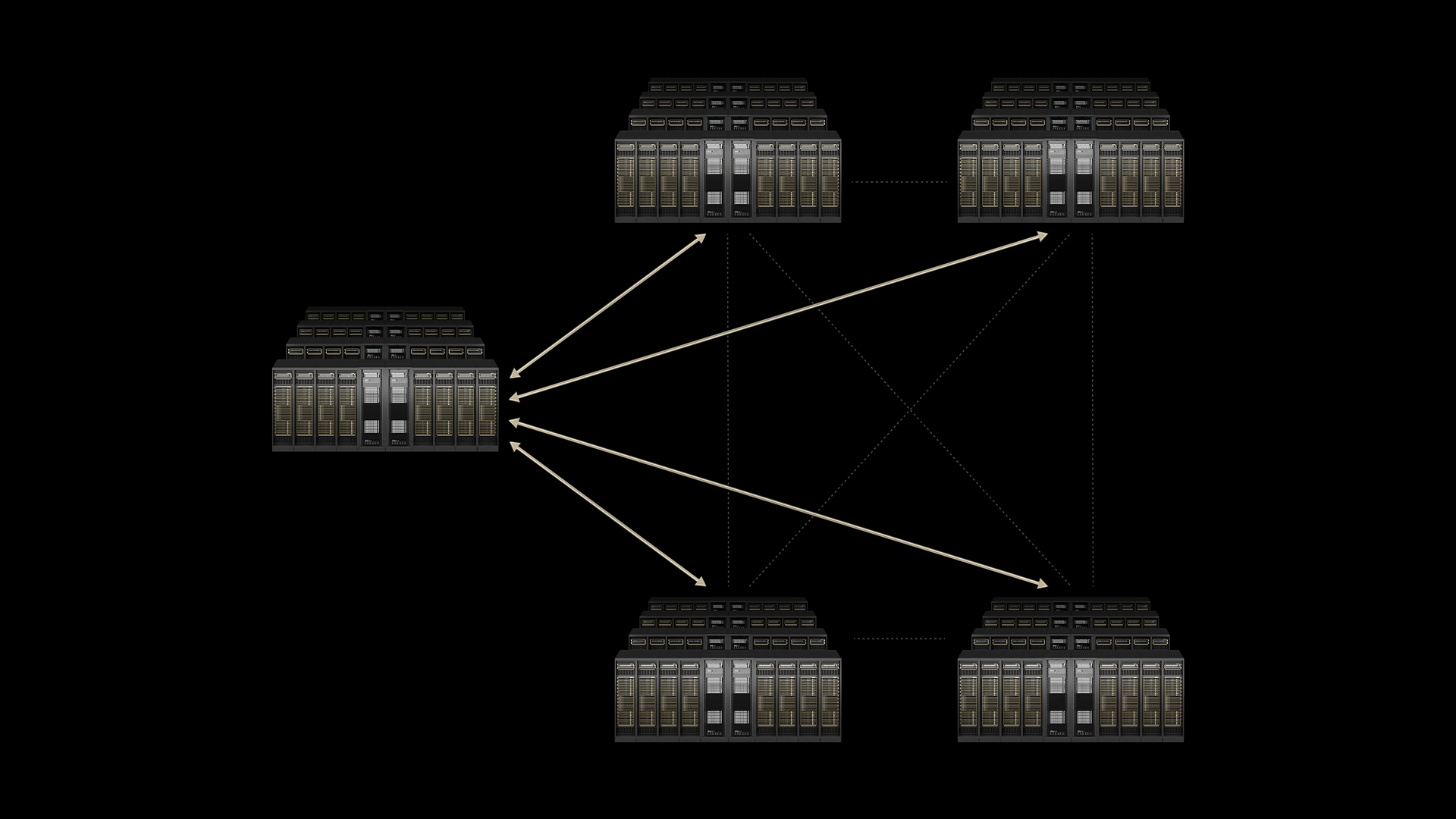
In a world where AI data centres are reaching their limits, NVIDIA’s Spectrum-XGS offers a groundbreaking solution. This innovative technology connects multiple facilities effortlessly, creating what’s dubbed “giga-scale AI super-factories.” This advancement is major for companies looking to optimize computational power without the hefty costs of building expansive facilities.
The Challenge of Limited Space

As artificial intelligence continues to evolve, the computational demands skyrocketing, traditional data centres often can’t keep up. One facility usually isn’t enough to handle advanced AI models that require immense processing capability. Many companies face tough choices: either construct new data centres or find efficient ways to link existing ones.
Why Single Facilities Aren’t Enough
The reality is that power capacity, physical space, and cooling options can significantly limit a data centre’s performance. When firms require additional computational muscle, building a new site is a common but cumbersome solution. Coordination between multiple locations can be a nightmare, especially with standard Ethernet networks that are plagued by high latency and other performance inconsistencies.
NVIDIA’s Revolutionary Solution: Spectrum-XGS Ethernet
The Spectrum-XGS Ethernet technology introduces what NVIDIA calls “scale-across” capabilities. This new method complements existing strategies like “scale-up,” which focuses on enhancing individual processors, and “scale-out,” which involves adding more processors within the same facility. But what exactly does Spectrum-XGS bring to the table?
Key Innovations of Spectrum-XGS Ethernet
- Distance-Adaptive Algorithms: These automatically optimize network performance based on the physical distance between data centres.
- Advanced Congestion Control: This feature helps avoid data bottlenecks during long-distance transmissions.
- Precision Latency Management: It ensures consistent response times, major for real-time applications.
- End-to-End Telemetry: This allows for real-time monitoring and optimization of the network.
NVIDIA claims that these enhancements could nearly double the performance of its communication library, which manages interactions between various graphics processing units (GPUs) and computing nodes. (CoinDesk)
Real-World Application: CoreWeave’s Adoption
CoreWeave, known for its cloud infrastructure solutions specializing in GPU-accelerated computing, is among the first to implement Spectrum-XGS Ethernet. Peter Salanki, the co-founder and CTO of CoreWeave, has expressed confidence in the technology’s potential to unify their data centres into a single, massive supercomputer. This could significantly enhance their clients’ access to expansive AI capabilities. You might also enjoy our guide on How Stablecoins Could Transform US Payment Systems.

A Practical Test Case
This deployment is more than just a tech upgrade; it’s a real-world test of whether NVIDIA’s ambitious claims hold true. If successful, it could alter the world of AI computing.
Implications for the Industry
NVIDIA’s announcement follows a trend of innovations aimed at improving networking infrastructure, including the original Spectrum-X platform. The company’s focus underscores the critical role of networking in advancing AI capabilities. Jensen Huang, NVIDIA’s founder, emphasizes the urgent need for solid AI factories to support the ongoing AI industrial revolution.
Redefining Future Data Centre Strategies
This technology could shift how AI data centres are designed and operated. Instead of constructing colossal facilities that strain local resources, businesses might choose to distribute their infrastructure across various smaller sites without sacrificing performance.
Technical Considerations and Challenges
Nonetheless, the effectiveness of Spectrum-XGS Ethernet will hinge on several factors. Long-distance network performance is still affected by physical limitations like the speed of light and the quality of the internet infrastructure connecting these sites. And, challenges like data synchronization and regulatory compliance across jurisdictions could complicate the management of distributed data centres.
Market Impact and Availability
NVIDIA has stated that the Spectrum-XGS Ethernet technology is available now, although specific pricing and deployment timelines haven’t been disclosed. The decision to adopt this technology will likely depend on its cost-effectiveness compared to other solutions, like building larger single-site facilities. For more tips, check out ETHZilla’s Bold Bet: Why Ethereum Stands to Transform Financ.
The Bottom Line: A Promising Future
If NVIDIA’s Spectrum-XGS technology performs as expected, we could witness a wave of faster AI services, more powerful applications, and potentially reduced costs for businesses. However, if it falters in real-world conditions, companies might still face the tough choice of expanding their facilities or compromising on performance. (Bitcoin.org)
Ultimately, CoreWeave’s deployment will serve as a important trial for this innovative technology. The outcomes will likely influence whether other companies will follow suit or remain with more conventional networking strategies. For now, NVIDIA’s ambitious vision is set against the reality of the AI industry’s evolving space.


